
How Much is a New Transmission For a Car?
|
|
Contents
How Much Does a New Transmission Cost?
New, Remanufactured, Rebuilt or Used
Replacement Costs by Transmission Type
What Pushes the Price Up or Down
Signs Your Transmission is Failing
Is It Worth Replacing the Transmission?
What a Car With a Failed Transmission is Worth
Does a Blown Transmission Affect Your Title?
Who Might Pay: Warranty, Insurance and Recalls
If You Decide to Get Rid of the Car
How to Check a Shop or Junk Car Buyer is Licensed
Key takeaways
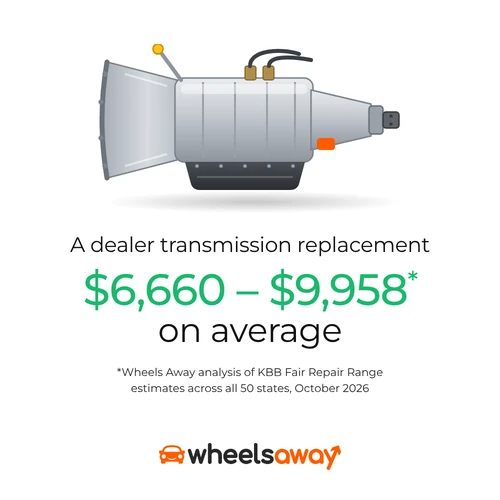
- The average dealer transmission replacement cost ran from $6,660 for a CVT to $9,958 for a dual-clutch unit, according to Kelley Blue Book (KBB) Fair Repair Range estimates collected by Wheels Away across all 50 states on October 13, 2026.
- In KBB’s dealer estimates, parts made up 75% to 85% of the bill and labor the rest.
- A used or remanufactured unit can cost thousands less than KBB’s dealer parts estimate: a used 2018 Nissan Rogue CVT had a median eBay Motors asking price of $1,797 in October 2026, against KBB’s $4,995 average parts estimate.
- A failed transmission does not brand a car’s title, and the car still has a cash value as it stands.
- The only figure that applies to your car is a written estimate for its Vehicle Identification Number (VIN).
If your once-reliable daily ride now needs a new transmission, you might be feeling intimidated by the cost of replacement.
A dealer transmission replacement averaged $6,660 to $9,958, depending on the transmission type, in KBB estimates Wheels Away collected across all 50 states in October 2026. This guide breaks down what makes up that bill, how a remanufactured, rebuilt or used unit changes it, and how to tell whether the repair is worth it on your car.
If replacement is too expensive, you have other options:
| Option | Definition | Indicative cost |
| Repair | Fix one failed part, such as a sensor, solenoid or leak | Typically between $100 – $1000, plus diagnosis (Luke Oswald, Wheels Away) |
| Rebuild | Replace worn internal parts and keep the original case | $1,200 to $3,900 for the unit, plus labor (Luke Oswald, Wheels Away) |
| Replace | Install a replacement unit at a dealer | $6,660 to $9,958 (KBB dealer averages, October 2026) |
| Sell or Junk | Sell it as-is or for junk | $100 – $500 (Wheels Away, 2026) |
How Much Does a New Transmission Cost?
A dealer transmission replacement averaged $6,660 to $9,958 in Wheels Away’s analysis of KBB Fair Repair Range estimates, collected in all 50 states in October 2026.
These estimates are indicative; the only figure that applies to your car is a written estimate for its vehicle identification number (VIN).
What the Parts Cost
The average parts cost across our four example vehicles was $6,646 in KBB dealer estimates collected in all 50 states on October 13, 2026. Parts made up 85% of every estimate for the automatic and manual cars and 75% for the CVT and dual-clutch cars, so parts are the biggest line on any quote.
What the Labor Costs
The average dealer labor cost across our four example vehicles was $1,662, according to KBB’s October 2026 estimates. Labor made up 15% to 25% of every estimate.
Dual-clutch labor averaged $2,490, about double the automatic’s $1,280.
The Extras That Get Added to the Bill
A written estimate can include charges beyond the unit and labor. These are the ones to ask about:
- Diagnostic and teardown fees: to confirm the fault.
- Core charge: a refundable deposit added to the bill, which you get back when you return your old transmission complete and within the supplier’s deadline. Toyota’s remanufactured Camry transmission carries a $1,000 core charge (Olathe Toyota, October 14, 2026).
- Transmission fluid and cooler flush: often required to keep a replacement unit’s warranty valid.
- Torque converter: sometimes replaced alongside an automatic if metal debris has reached the fluid.
- Programming and towing: newer automatics and dual-clutch units may need software setup, and a car that won’t drive needs a tow.
New, Remanufactured, Rebuilt or Used
The unit you choose will have the biggest impact on the final cost. The exact gap varies by model, and a new unit isn’t always available.
Factory New Units
A new Original Equipment Manufacturer (OEM) transmission isn’t available for every car, and the price varies widely by model.
On October 14, 2026, Nissan’s official parts store listed a new 2018 Rogue SV CVT at $3,874 to $4,242 before its core charge, and Honda’s genuine 2018 Civic Type R transmission listed at $8,471 on HondaPartsNow and $11,283 at the manufacturer’s suggested retail price (MSRP). Toyota no longer sells a new unit for the 2018 Camry LE and supplies only a remanufactured one, and Audi doesn’t publish a price for the 2018 A3’s unit; dealers quote it by VIN.
New units are often recommended for newer or high-value vehicles, or if your manufacturer requires specific OEM parts to be installed to stay within warranty.
Remanufactured and Rebuilt Units
A remanufactured transmission is a used transmission that has been fully disassembled and rebuilt to the manufacturer’s specifications, typically in a factory setting, with wear parts replaced. A rebuilt transmission is repaired by a shop, which replaces only the parts that are worn or damaged.
Most remanufactured or rebuilt units cost $1,200 to $3,900, depending on the model, according to Luke Oswald, End of Life Vehicle Specialist at Wheels Away. That price covers the unit alone, so your total transmission rebuild cost also includes the labor to remove and reinstall it. Factory units can cost more: Toyota’s genuine remanufactured transmission for the 2018 Camry LE listed at $3,702 online and $4,498 at MSRP on October 14, 2026, plus a $1,000 refundable core charge.
A remanufactured or rebuilt unit can be a more economical alternative and is usually the go-to option unless your transmission is damaged beyond repair or you must have an OEM part installed to protect the warranty.
Used and Salvage Yard Units
A used transmission is usually the cheapest unit, but the saving depends on the model. In 48 eBay Motors listings for a used 2018 Nissan Rogue CVT checked October 14, 2026, the median asking price was $1,797, less than half the $3,874 to $4,242 list price of a new Nissan unit. For the 2018 Camry LE, the median of 36 used listings was $3,662, close to the $3,702 online price of Toyota’s remanufactured unit.
The trade-off is the unknown history.
The Federal Trade Commission (FTC) says salvage parts’ reliability “is seldom guaranteed,” and the stated mileage on the Rogue units we checked ran from 79,000 to 159,000 miles.
A used unit can make sense on an older car you don’t plan to keep long. Ask for the donor car’s mileage, whether the unit was tested, and whether the warranty covers labor before you agree.
Warranty Terms Compared
A replacement transmission warranty can run from 60 days on a used unit to three years with unlimited miles. In used listings for the 2018 Rogue and Camry on eBay Motors, checked October 14, 2026, warranties ran from 60 days to six months where sellers stated one, and usually covered parts only.
| Unit type and supplier | Term | Mileage cap | Labor included? | Where it’s honored | What voids it |
| New or remanufactured: Ford | 3 years | Unlimited | Not stated; see dealer | More than 3,000 Ford and Lincoln dealers nationwide | Not published; Ford says there’s no commercial-use exclusion |
| Remanufactured: Jasper Engines & Transmissions | 3 years | 100,000 miles | Yes | Nationwide, more than 10,000 locations; transferable | Not published; see Jasper’s written warranty |
| Rebuilt: Automatic Transmission Rebuilders Association (ATRA) Golden Rule Warranty | 1 to 3 years, depending on the shop | 12,000 to 100,000 miles | Yes, plus fluid | Participating ATRA member shops nationwide | Not published; the shop’s printed agreement sets the limits |
| Used: LKQ | 6 months | None stated | Only with LKQ’s approval of the estimate | US and Canada | Commercial, fleet or racing use; abuse; skipping the required fluid change and cooler flush at installation; improper maintenance |
Replacement Costs by Transmission Type
Dual-clutch transmissions were the most expensive to replace in our data, averaging $9,958 in KBB’s October 2026 dealer estimates, and CVTs the cheapest at $6,660. We priced one 2018 model for each transmission type, each sold with only that type.
The table below shows the 50-state average parts, labor and total cost for each transmission type.
| Transmission type (2018 model) | Avg parts | Avg labor | Avg total | Labor share |
| Dual-clutch transmission (Audi A3 Premium) | $7,468 | $2,490 | $9,958 | 25% |
Automatic transmission (Toyota Camry LE) | $7,254 | $1,280 | $8,535 | 15% |
Manual transmission (Honda Civic Type R) | $6,866 | $1,212 | $8,078 | 15% |
Continuously variable transmission (Nissan Rogue SV) | $4,995 | $1,665 | $6,660 | 25% |
Average of all four | $6,646 | $1,662 | $8,308 |
Cost Examples by Vehicle
The same car’s dealer estimate can vary by hundreds or thousands of dollars from state to state. The manual Civic varied most: KBB’s estimate was $6,431 in seven Southeastern states and $9,097 in 11 Midwest, Plains and Mountain states.
The table below shows KBB’s dealer replacement estimate (the midpoint of the parts range plus labor) for each of our four 2018 vehicles, averaged across all 50 states, with the lowest and highest state estimates, collected October 2026.
Vehicle (2018 model) | Average across all 50 states | Lowest state estimate | Highest state estimate |
Toyota Camry LE (automatic) | $8,535 | $8,413 (13 Southeastern, Great Lakes and Ohio Valley states) | $9,001 (Virginia) |
Nissan Rogue SV (CVT) | $6,660 | $6,283 (6 Great Lakes and Ohio Valley states) | $6,943 (11 Northeast and Mid-Atlantic states) |
Honda Civic Type R (manual) | $8,078 | $6,431 (7 Southeastern states) | $9,097 (11 Midwest, Plains and Mountain states) |
Audi A3 Premium (dual-clutch) | $9,958 | $9,115 (7 Southeastern states) | $10,323 (11 Midwest, Plains and Mountain states) |
What Pushes the Price Up or Down
The price of a transmission job depends on how complex the unit is, how long it takes to remove and reinstall, the shop labor rate and what the parts cost to source.
Make, Model and Model Year
Newer transmissions generally cost more to repair because they’re more complex. Modern units use pricier clutch materials and more electronics, such as solenoids, sensors and wiring harnesses, and a rebuild kit that once cost under $100 can now top $1,000, according to Luke Oswald, End of Life Vehicle Specialist at Wheels Away.
Gear Count and Drivetrain Layout
More gears mean more clutch packs, gear sets and labor time. Drivetrain layout matters too: most front-wheel-drive cars use a transaxle, which combines the transmission and differential in one unit packed into the engine bay, while all-wheel-drive vehicles add a transfer case or power transfer unit that may also need removing.
Larger vehicles can take longer to work on and cost more, too. Removing, rebuilding and reinstalling the transmission on a full-size truck can take approximately two to five days, depending on the truck, transmission type and extent of the damage.
Shop Type and Regional Labor Rates
Independent-shop labor varied far more by state than dealer labor in our data for a 2018 Toyota Camry LE. RepairPal’s independent-shop labor estimates, collected in October 2026, ranged from $1,104 in Vermont, West Virginia and Wyoming to $3,310 in Florida. KBB’s dealer labor estimates for the same car ranged only from $1,262 to $1,350.
The table below shows the five most and least expensive states for independent-shop transmission labor on a 2018 Toyota Camry LE, with KBB’s dealer estimate alongside, collected in October 2026. The full 50-state breakdown is in the expandable accordion below it.
Most Expensive
| State | Dealer labor (KBB) | Independent labor (RepairPal) | |
| Florida | $1,262 | $3,310 | |
| Georgia | $1,262 | $2,770 | |
California | $1,300 | $2,749 | |
Texas | $1,275 | $2,749 | |
Illinois | $1,262 | $2,626 |
Least Expensive
| State | Dealer labor (KBB) | Independent labor (RepairPal) | |
| Vermont | $1,262 | $3,310 | |
West Virginia | $1,262 | $2,770 | |
Wyoming | $1,300 | $2,749 | |
Alaska | $1,275 | $2,749 | |
South Dakota | $1,262 | $2,626 | |
50-state average | $1,280 | $2,058 |
| State | Dealer labor (KBB) | Independent labor (RepairPal) |
| Alabama | $1,262 | $1,554 |
| Arizona | $1,300 | $1,566 |
| Arkansas | $1,275 | $2,140 |
| California | $1,300 | $2,749 |
| Colorado | $1,275 | $2,505 |
| Connecticut | $1,287 | $1,938 |
| Delaware | $1,287 | $2,157 |
| Florida | $1,262 | $3,310 |
| Georgia | $1,262 | $2,770 |
| Hawaii | $1,300 | $2,069 |
| Idaho | $1,300 | $1,645 |
| Illinois | $1,262 | $2,626 |
| Indiana | $1,262 | $2,271 |
| Iowa | $1,275 | $2,375 |
| Kansas | $1,275 | $1,744 |
| Kentucky | $1,262 | $2,046 |
| Louisiana | $1,275 | $2,157 |
| Maine | $1,287 | $1,625 |
| Maryland | $1,287 | $2,271 |
| Massachusetts | $1,287 | $2,253 |
| Michigan | $1,262 | $2,253 |
| Minnesota | $1,275 | $2,372 |
| Mississippi | $1,262 | $1,442 |
| Missouri | $1,275 | $2,260 |
| Montana | $1,275 | $1,628 |
| Nebraska | $1,275 | $2,030 |
Nevada | $1,300 | $2,505 |
New Hampshire | $1,287 | $2,046 |
New Jersey | $1,287 | $2,271 |
New Mexico | $1,275 | $1,628 |
New York | $1,287 | $2,271 |
North Carolina | $1,262 | $2,140 |
North Dakota | $1,275 | $1,449 |
Ohio | $1,262 | $2,267 |
Oklahoma | $1,275 | $2,267 |
Oregon | $1,300 | $2,253 |
Pennsylvania | $1,287 | $2,157 |
Rhode Island | $1,287 | $1,938 |
South Carolina | $1,262 | $2,157 |
South Dakota | $1,275 | $1,363 |
| Tennessee | $1,262 | $2,386 |
Texas | $1,275 | $2,749 |
Utah | $1,300 | $2,046 |
Vermont | $1,287 | $1,104 |
Virginia | $1,350 | $2,030 |
Washington | $1,300 | $2,386 |
West Virginia | $1,262 | $1,104 |
Wisconsin | $1,275 | $2,154 |
Wyoming | $1,275 | $1,104 |
50-state average | $1,280 | $2,058 |
City vs. Rural Labor Rates
Where you live within your state matters too.
According to the American Automobile Association (AAA), shops in big cities generally charge more than those in smaller towns, because rent, wages and other running costs are higher. AAA, citing a 2025 PartsTech report, says most shops charge $120 to $159 an hour.
Our figures reflect city prices. Each state’s estimates come from a single city ZIP code, such as 33131 in Miami or 25301 in Charleston, West Virginia.
The highest independent-shop estimates came from Miami ($3,310), Atlanta ($2,770), and Los Angeles and Houston ($2,749 each). The lowest came from Burlington, Charleston and Cheyenne ($1,104 each). City size isn’t the whole story, though: Manhattan (ZIP 10001) came in at $2,271, below Miami and Atlanta.
If you live outside a big city, a local shop may quote less than the figure for your state. That isn’t guaranteed, though: AAA notes that a shop with no competitors nearby can charge more to cover the cost of getting parts out to it.
Parts Supply and Back Orders
Since May 3, 2025, imported transmissions and other powertrain parts have carried a tariff of up to 25% under Section 232 of the Trade Expansion Act of 1962, which can raise the price of a replacement unit. Parts from the European Union, Japan, and South Korea pay 15% in total, parts from the UK pay 10%, and parts that qualify under the United States-Mexico-Canada Agreement (USMCA) are exempt. Shortages of used units for rebuilding can also delay the repair.
Signs Your Transmission Is Failing
The most common signs of a failing transmission are slipping gears, delayed engagement when you select Drive, harsh shifts, a burning smell and red fluid under the car. The table below shows what to watch for by transmission type.
Transmission type | Signs to watch for |
Automatic | Delayed engagement, slipping gears, the engine revving without the car speeding up, harsh shifts. |
| Manual | Grinding when shifting gears, popping out of gear, a slipping clutch. |
| CVT | Delayed acceleration, whining, shuddering, a burning smell from overheating. |
| Dual-clutch | Shuddering when pulling away, clunking or grinding, harsh shifts in stop-and-go traffic. |
Repair, Rebuild or Replace?
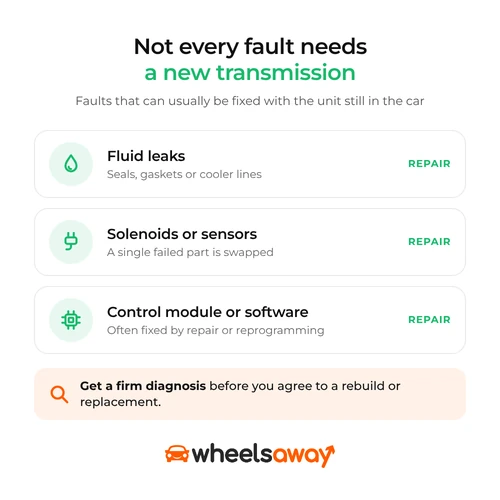
Not every transmission fault needs a new transmission. Leaks, failed solenoids and electronic faults can usually be fixed with the unit still in the car, so get a firm diagnosis before you agree to a rebuild or replacement.
Faults That Are Usually a Repair
A repair replaces or fixes a single component, such as a leaking seal, rather than the whole unit.
Faults that are often repairable include:
- fluid leaks from seals, gaskets or cooler lines
- failed solenoids or sensors
- control-module or software faults
When a Rebuild Makes Sense
A rebuild makes sense when the case and major parts are sound and only worn internal parts need replacing. If the damage is extensive, such as broken gears or a failed torque converter that has spread debris through the unit, a replacement is usually the better option.
Getting a Second Opinion From a Transmission Specialist
If a shop quotes a full replacement, a second diagnosis from a transmission specialist can show whether a smaller repair would do. Two credentials are worth checking:
- ASE A2 certification: the National Institute for Automotive Service Excellence (ASE) A2 test covers automatic transmissions and transaxles, and certifications are valid for five years, after which technicians must retest.
- ATRA membership: ATRA member shops agree to a code of ethics, and you can find one through ATRA’s shop finder.

Is It Worth Replacing the Transmission?
A transmission replacement is worth it when the car’s value after the repair, minus the bill, is more than someone will pay for it as it stands. A new transmission restores the car’s normal market value; it does not add to it.
The Repair-to-Value Calculation
The repair-to-value ratio compares your repair quote with what the car will be worth once it’s fixed. Subtract the quote, and any other work due soon, from the car’s private party value after repair.
The result is the value left after repair. If someone will pay you more than that for the car as it stands, selling it unrepaired leaves you better off. In our examples, the repair quote came to 62% of the Camry’s value after repair, 64% of the Rogue’s and 84% of the A3’s.
The table below works through the numbers for three of our example cars, using the 50-state average KBB dealer estimates from October 2026.
2018 Toyota Camry LE | 2018 Nissan Rogue SV | 2018 Audi A3 Premium | |
Repair quote (50-state KBB dealer average, October 2026) | $8,535 | $6,660 | $9,958 |
Value as it stands, unrepaired (Wheels Away, October 2026) | $4,540 | $1,798 | $4,532 |
Private party value after repair (KBB, October 2026) | $13,800 | $10,400 | $11,850 |
Cost of the next car: same car bought used from a dealer (KBB, October 2026) | $15,400 | $11,850 | $13,250 |
Other work due soon: brake pad replacement* | $298 | $343 | $335 |
Value left after repair and other work | $4,967 | $3,397 | $1,557 |
The Rogue has the clearest case for repair: after the repair and brake work, it’s worth about $1,600 more than its unrepaired value. The Camry is closer: repairing it comes out only about $430 ahead, and the repair costs just over half the price of another 2018 Camry. The A3 is better sold as it stands, which would leave its owner about $3,000 better off than repairing it.
What Else Is Due on the Car
An old, high-mileage car may also be due for other expensive work. It’s worth asking the shop to check the rest of the vehicle while it’s in for diagnosis.
Subtract any other work due in the next year, such as tires, brakes or a timing belt (all typical in older, high-mileage vehicles), from the value left after repair to ensure you have the most accurate figure.
Repair, Sell or Junk?
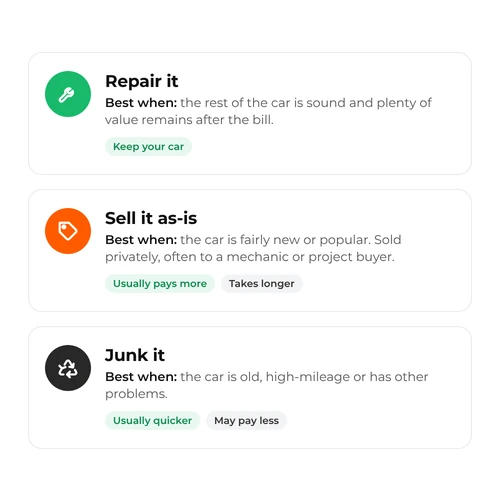
The right choice depends on the value left after repair and the car’s overall condition:
- Repair it: when the rest of the car is sound and plenty of value remains after the bill.
- Sell it as-is: privately, often to a mechanic or project buyer, when the car is fairly new or popular. It usually pays more than a junk buyer but takes longer.
- Junk it: when the car is old, high-mileage, or has other problems. A junk sale is usually quicker than a private sale, but may pay less.
What a Car With a Failed Transmission Is Worth
A car with a failed transmission still has a cash value. According to Wheels Away’s 2026 data, the average junk car sells for between $100 and $500, but a newer car with a failed transmission can fetch far more: our instant offers for the three example cars ranged from $1,798 to $4,540 in October 2026.
A junk or salvage offer is built from three things:
- Scrap metal weight: a heavier car contains more metal, so it’s worth more as scrap. Our example cars weigh between 3,197 and 3,614 pounds (KBB), and the U.S. Geological Survey (USGS) estimates steel mills paid $319 per metric ton for scrap steel in 2025. A yard pays less for a whole car, since not all of it is metal and it has to be drained and shredded first.
- Reusable parts: a working engine, alternator, panels and wheels raise the offer above scrap.
- The catalytic converter: its precious metals make it one of the most valuable parts, and a factory converter is worth more than an aftermarket one.
A car that still runs can be worth up to twice as much as one that doesn’t, so it may pay to sell before the transmission fails completely. Our guide to junk car value explains the factors that move the price most, and how to estimate yours.
Does a Blown Transmission Affect Your Title?
No. A blown transmission does not brand a car’s title. Brands come from an insurer declaring a total loss, when repair costs pass a state-set share of the car’s actual cash value (ACV), or from a state junk designation.
Thresholds differ by state: Michigan, for example, requires a salvage title at 75% of ACV and a scrap title at 91%.
The table below defines the most common title brands.
Title brand | What it means |
| Clean | No brand: the car hasn’t been declared a total loss or designated junk by the state. A car with a failed transmission usually keeps a clean title. |
Salvage | An insurer declared the car a total loss because repair costs passed the state’s threshold. A salvage car generally can’t be registered or driven on public roads until it’s rebuilt and passes a state inspection. |
| Rebuilt | A salvage car that was repaired and passed a state inspection. The rebuilt brand stays on the title for good. |
| Junk | The state has designated the car for parts or scrap, so it can’t be registered for road use again. |
Non-repairable | The car is too badly damaged to be rebuilt and can only be dismantled for parts or scrap. |
To learn more about the difference between these brands, check out our guide to rebuilt and salvage titles.
Who Might Pay: Warranty, Insurance and Recalls
Before paying for a transmission yourself, check whether a recall, a warranty or a class action settlement covers it.
Standard auto insurance pays for collision and comprehensive damage, not wear or mechanical failure, so confirm what your own policy covers with your insurer.
These are the places to check:
- Recalls and service bulletins: search your VIN on the National Highway Traffic Safety Administration (NHTSA) recall lookup; recall repairs are free at a franchised dealer.
- Class action settlements: CVT settlements, such as Stringer v. Nissan North America (final approval March 2022), have extended warranties or reimbursed repairs on specific models and years. Stringer covered 2014 to 2018 Nissan Rogues, including our example car, but its extended coverage has time and mileage limits, so check whether your car is still eligible.
- Powertrain warranty: check the term and mileage, and use a franchised dealer for the claim, since warranty repairs are usually paid only when an authorized dealer does them.
- Extended warranty: check whether it pays your shop’s actual labor rate and what age and mileage limits apply.
Under the Magnuson-Moss Warranty Act, a manufacturer can’t deny a warranty claim just because an independent shop serviced the car or non-original parts were used. It has to show that the work or part caused the failure.
How to Get an Honest Quote
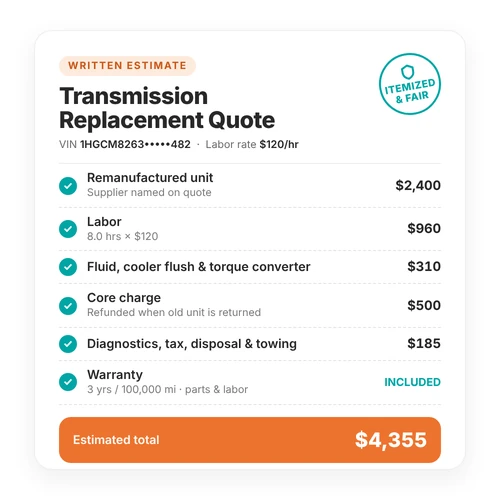
A fair transmission quote is written, itemized and tied to your car’s VIN, and it states the warranty on the work. Compare it with KBB’s Fair Repair Range for your car and ZIP code before you agree.
What a Written Estimate Should Itemize
A written transmission estimate should list each of these separately:
- the unit type (new, remanufactured, rebuilt or used) and its supplier
- labor hours and the shop labor rate
- transmission fluid, cooler flush and any torque converter
- the core charge and how it is refunded
- diagnostic and teardown fees, taxes, disposal and towing
- the warranty term, mileage cap and whether labor is covered
Diagnostic and Teardown Fees
A diagnostic fee pays for code scans, a fluid check, and a road test to confirm the fault, and typically runs $100 to $350, according to Luke Oswald, End of Life Vehicle Specialist, at Wheels Away. A teardown fee, typically $500 to $3,900 or more, pays to remove and open the unit when a shop suspects internal damage. Once a transmission is apart, you’ll usually pay to reassemble it even if you decline the repair, so get a second opinion first.
Questions to Ask Before Authorizing Work
Ask the shop these questions before you sign off on the work:
- Will the diagnostic or teardown fee be credited if I go ahead?
- What happens if the repair costs more than the estimate?
- Is the warranty honored nationwide, and does it cover labor?
- Can I have my old parts back?
State rules on estimates differ. In Washington, you’re entitled to a written estimate for repairs over $100, and Washington and Maryland both bar shops from charging more than 10% over it without your approval.
If a shop’s charges look wrong, contact your state attorney general’s consumer protection office; state attorneys general can handle auto repair complaints like dealers refusing to honor warranties, deceptive ads or practices, and fraudulent schemes.
Find your attorney general through the National Association of Attorneys General.
The FTC enforces Section 5 of the FTC Act against unfair and deceptive business practices but doesn’t resolve individual disputes.
Ways to Bring the Cost Down
The biggest savings come from the type of unit and the shop you choose. These three steps make the most difference:
- Get written quotes from a dealer and an independent shop, including a transmission specialist, for the same unit and warranty.
- Ask whether a rebuild or remanufactured unit would work instead of a new one.
- Check recalls, warranties and settlements first, and ask the dealer about a goodwill repair if you’re just outside warranty.
If You Decide to Get Rid of the Car
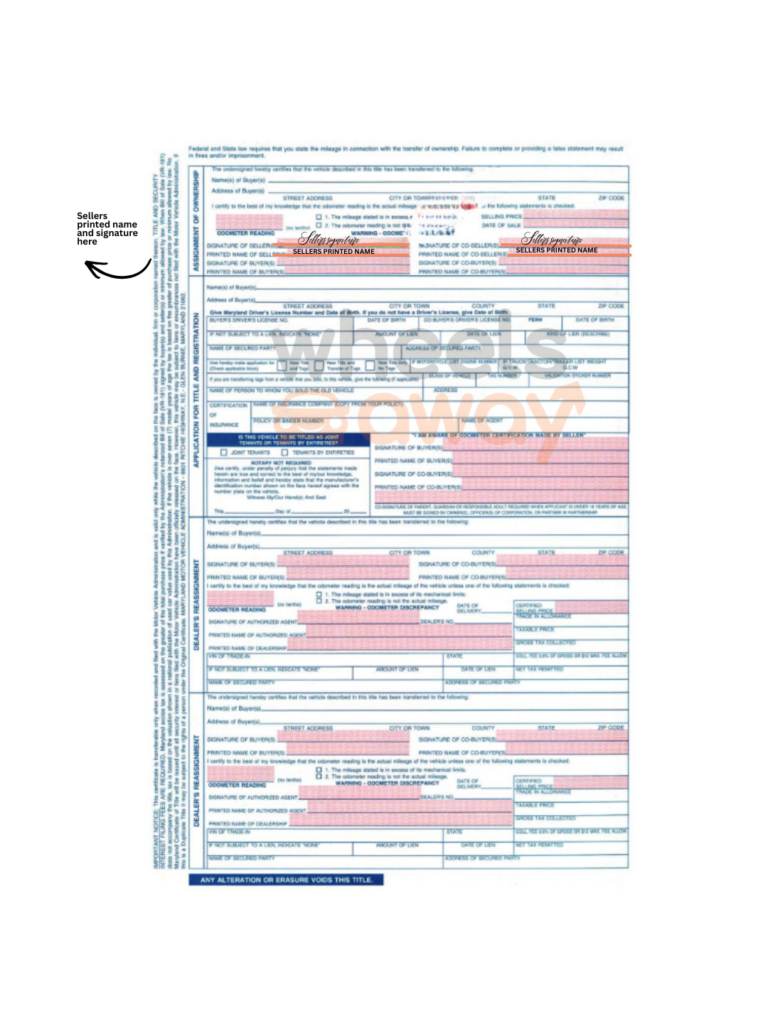
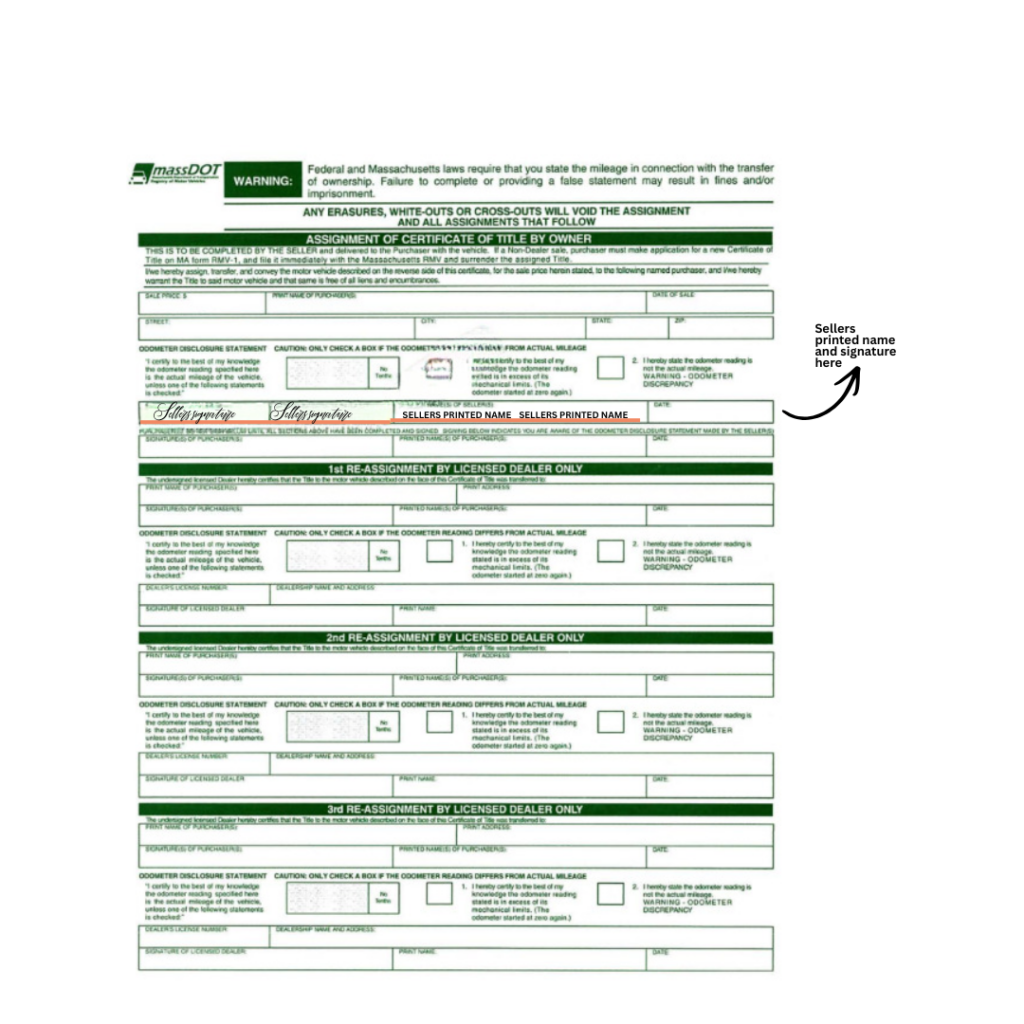
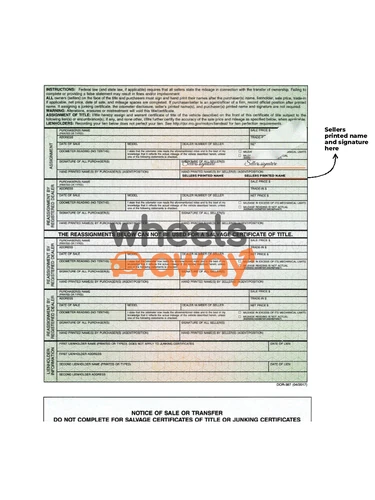
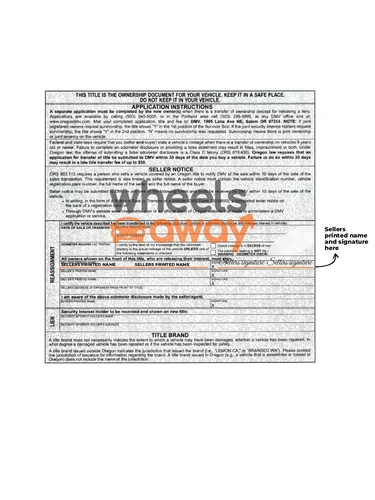
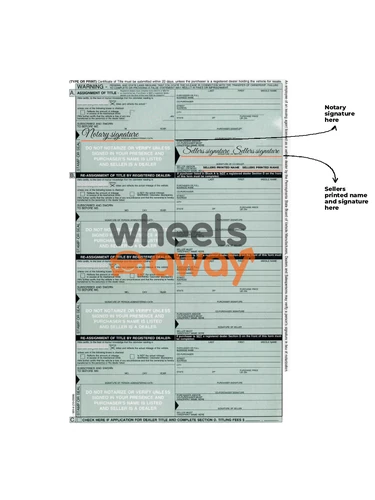
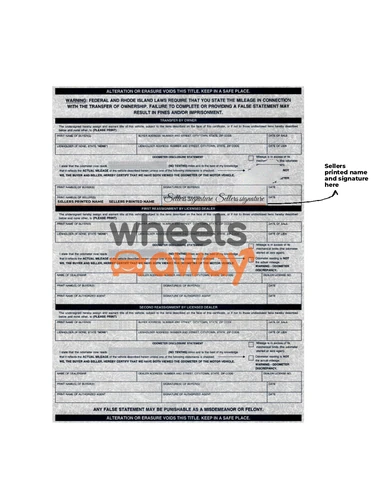
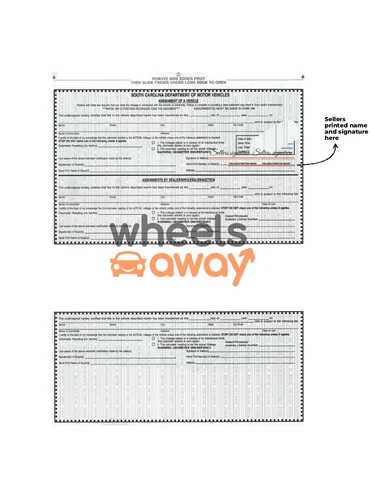
If you sell or junk the car, you’ll need to sign over the title, tell the state you no longer own it and deal with the plates. The forms and deadlines depend on the state where the car is registered, so check with your state’s DMV or motor vehicle agency.
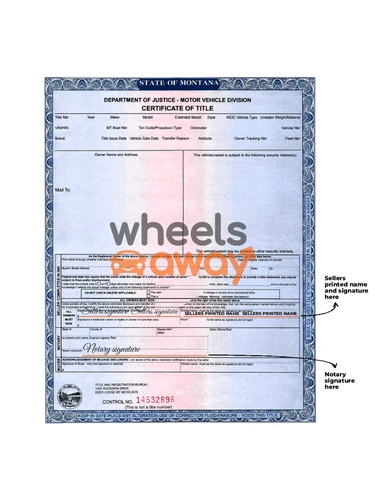
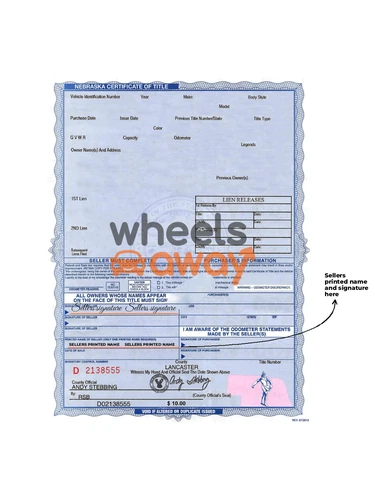
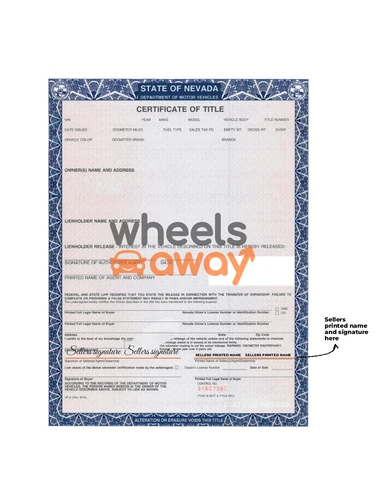
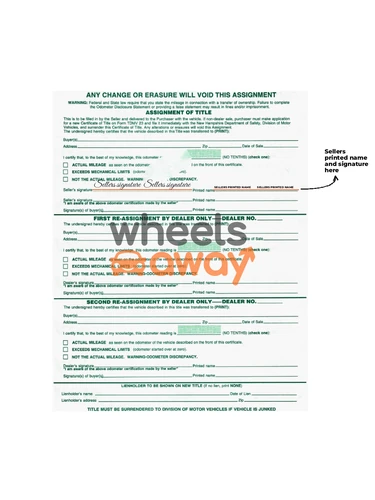
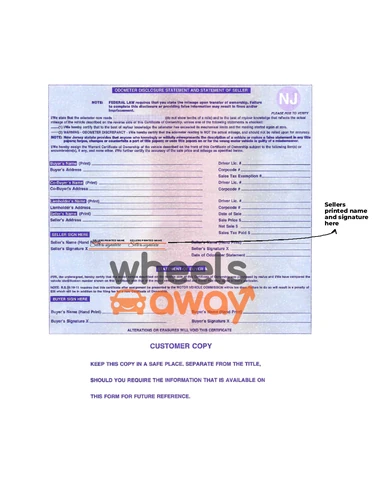
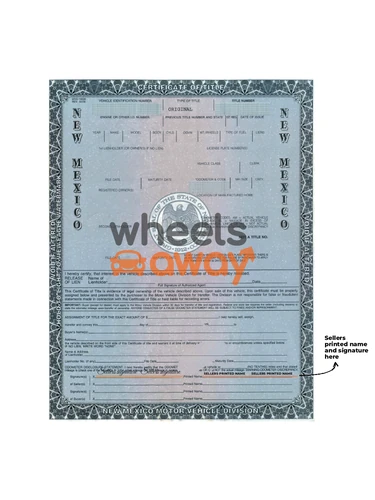
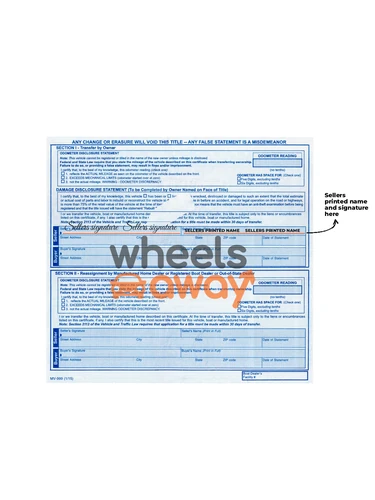
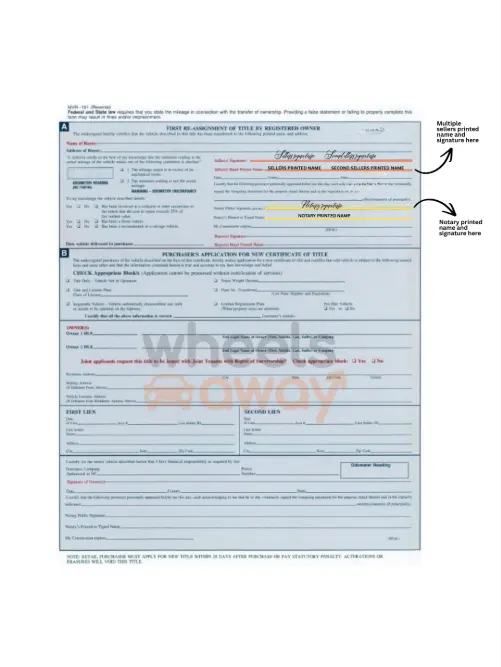
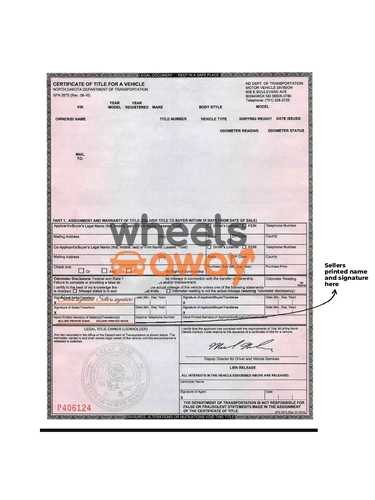
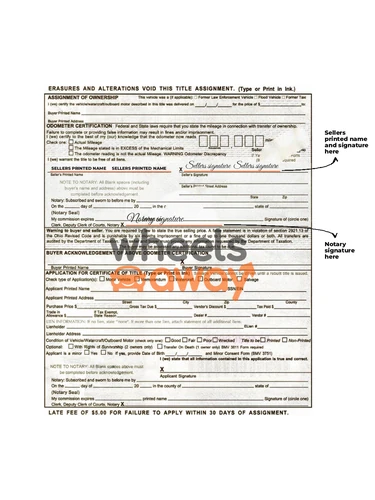
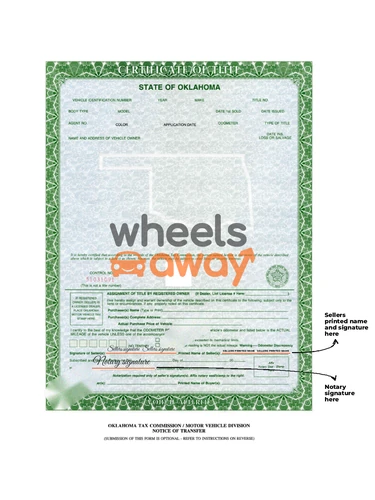
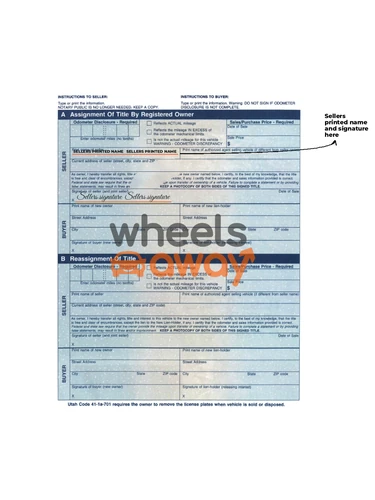
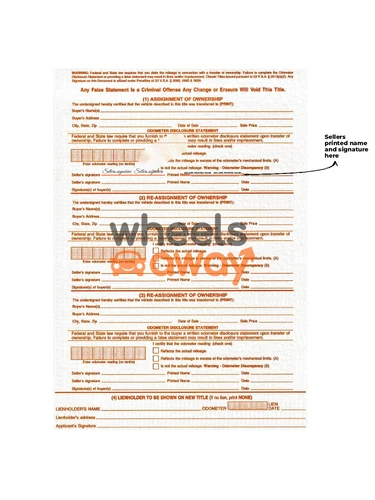
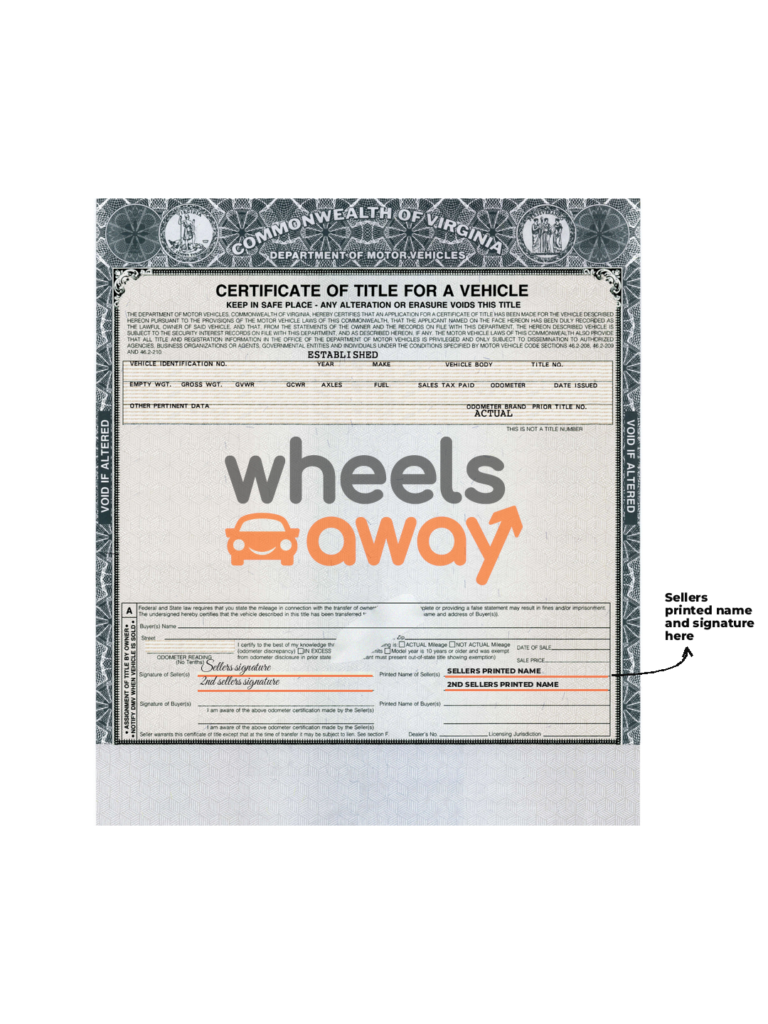
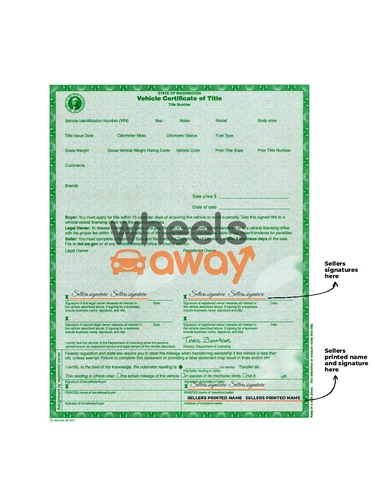
Signing Over the Title
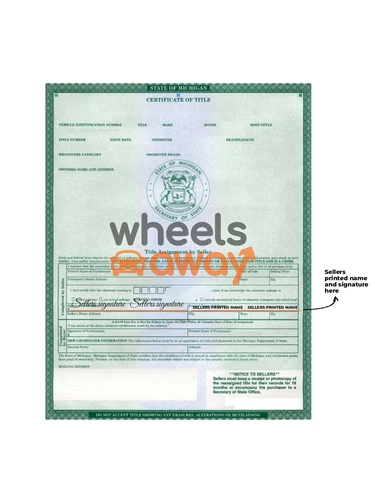
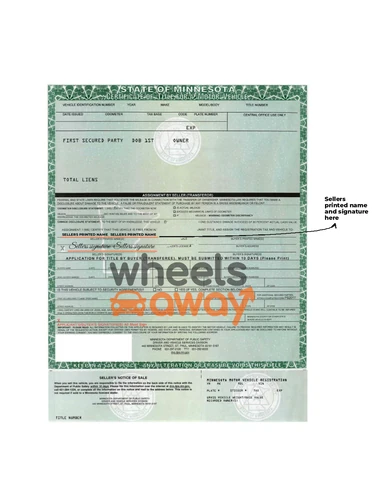
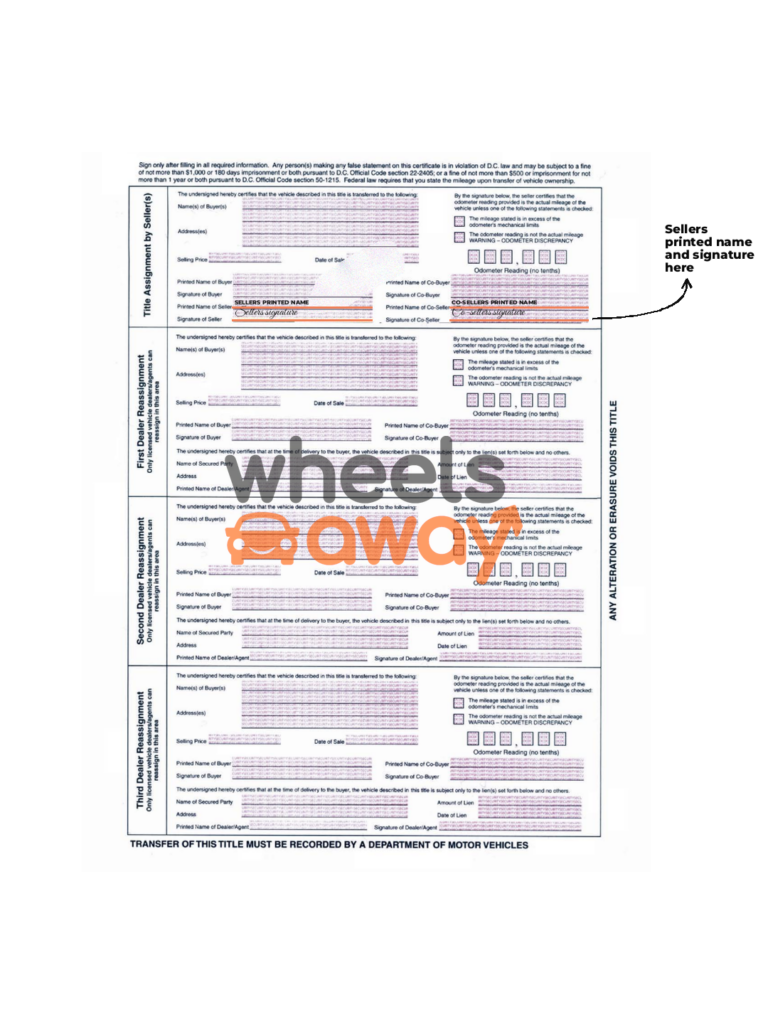
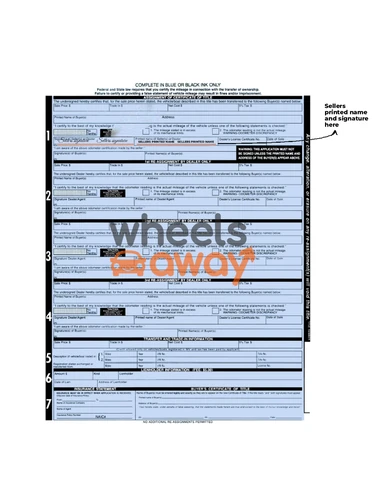
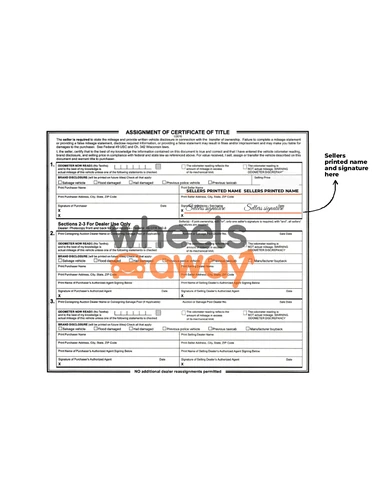
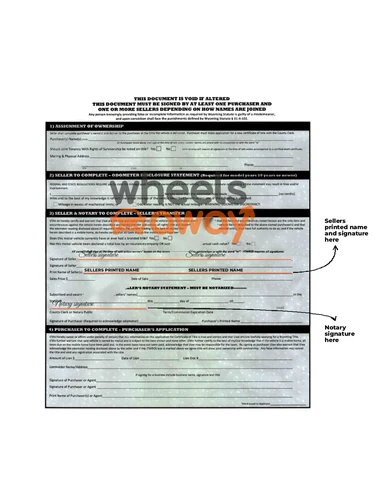
Sign the title over exactly as your state requires, including the odometer reading and sale date. Some states also require a notary or a separate bill of sale.
See our table below for images of the vehicle title in each state, odometer disclosure requirements, and instructions on where to sign.
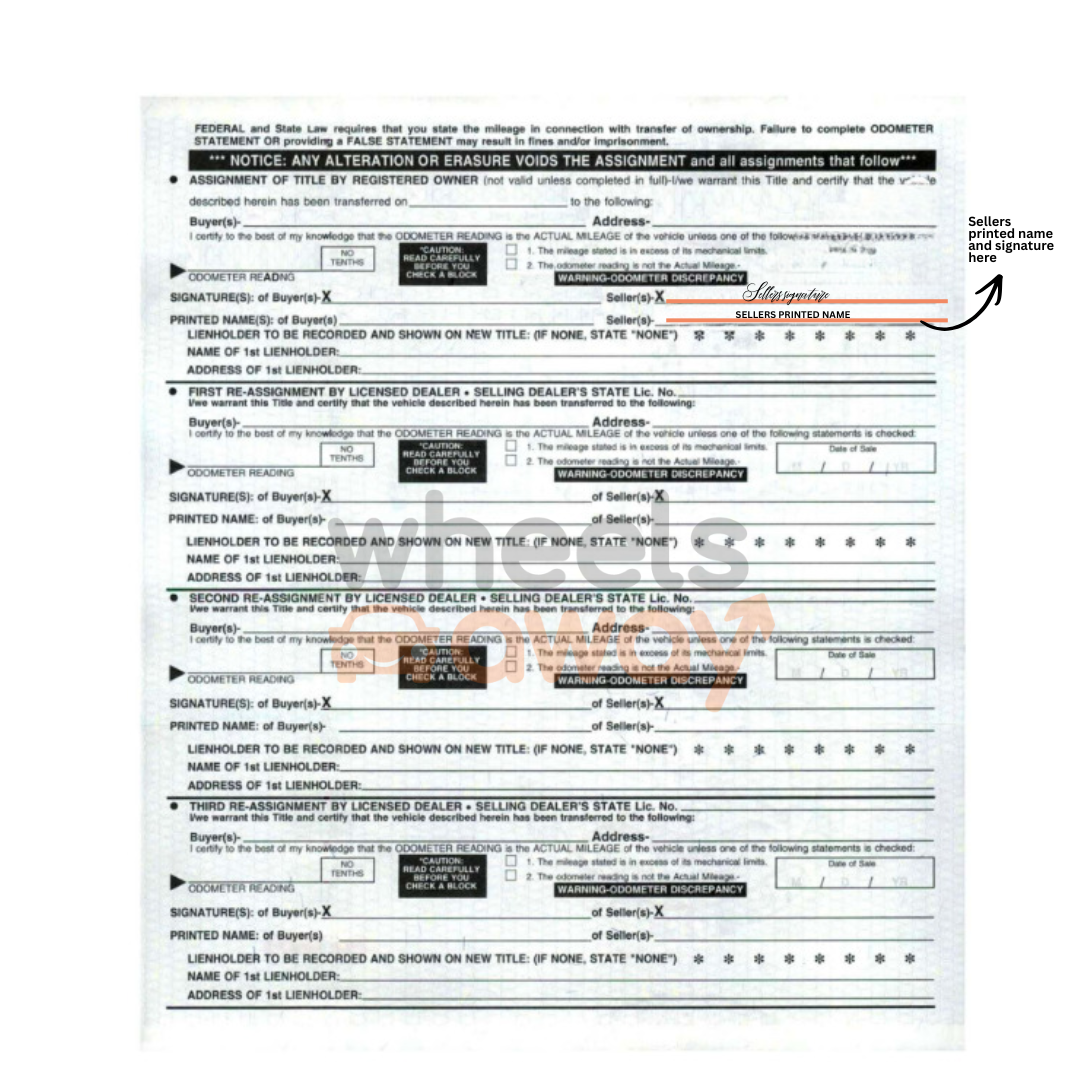
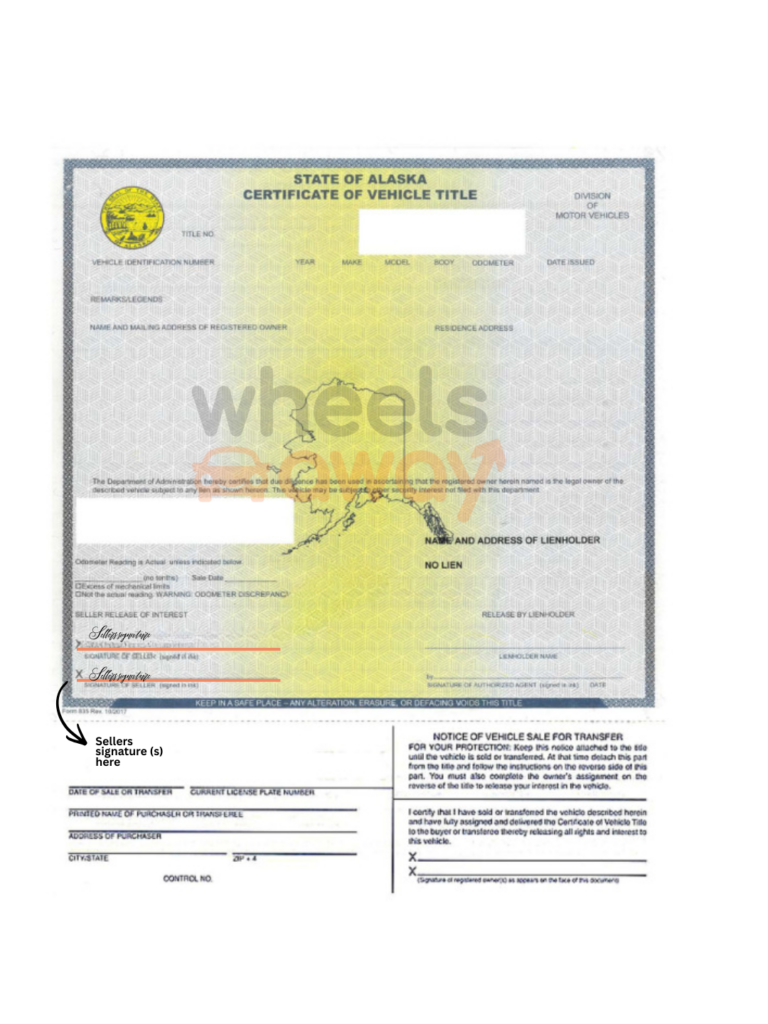
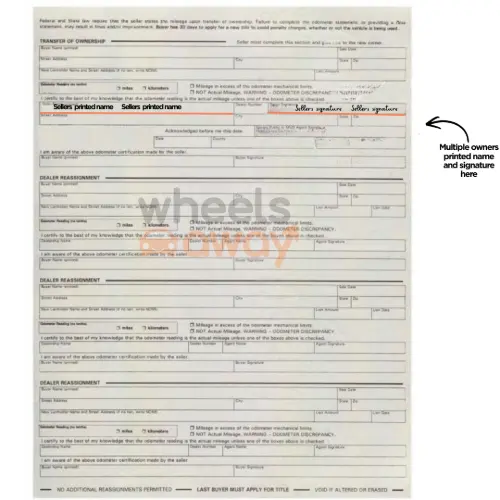
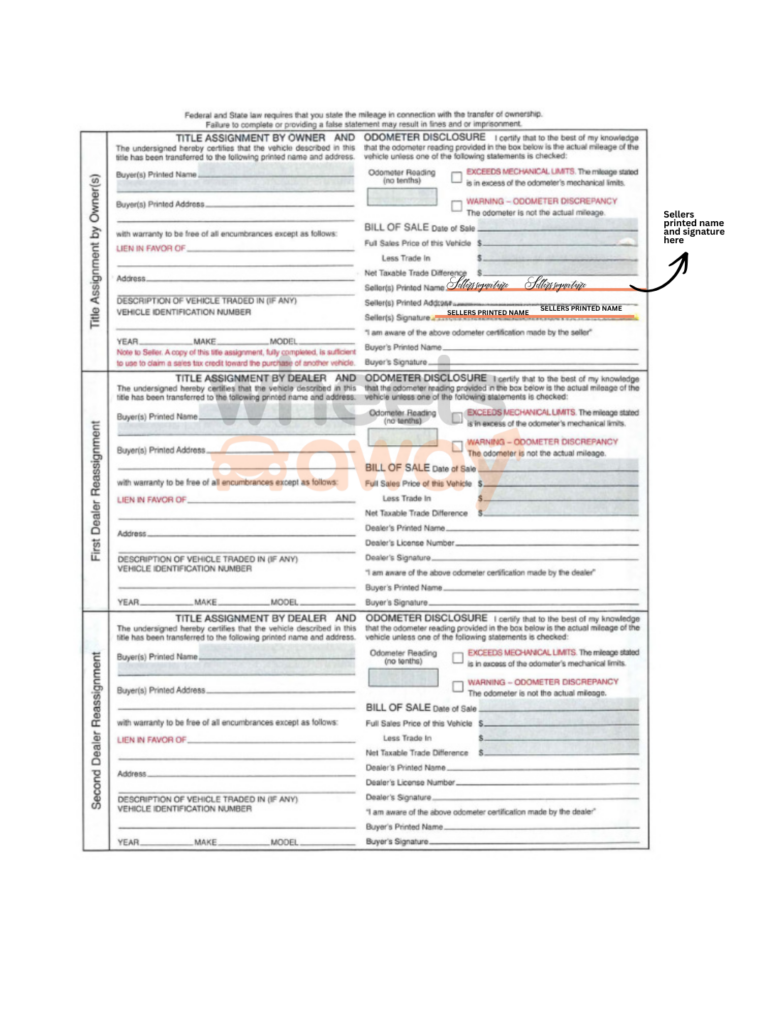
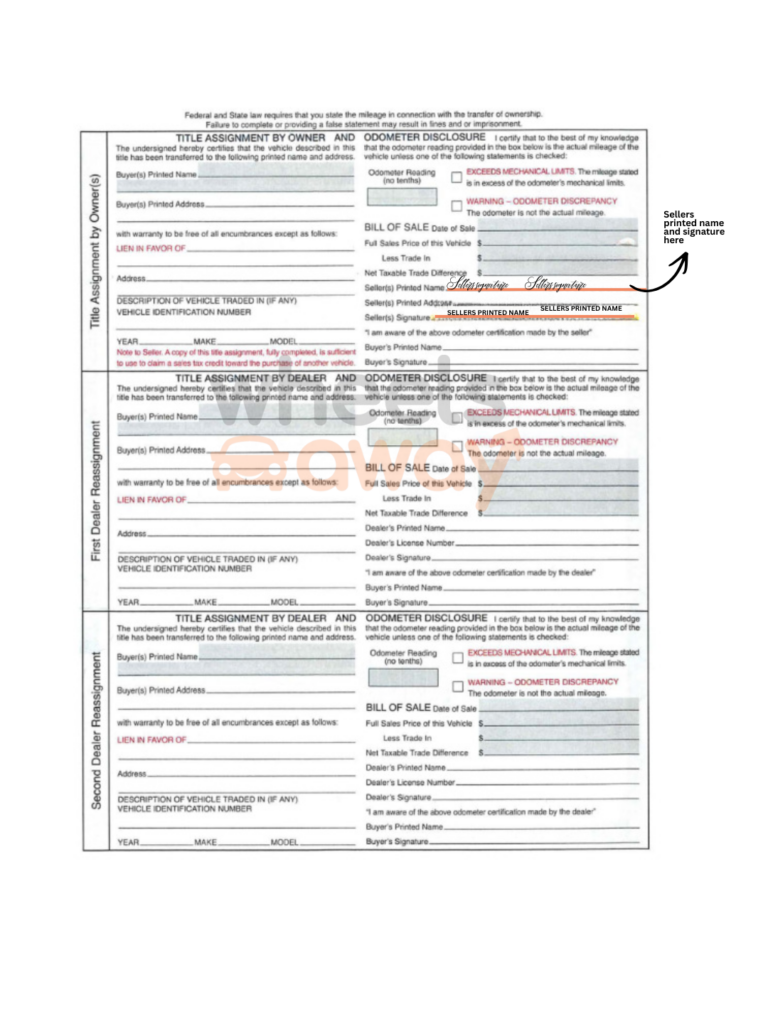
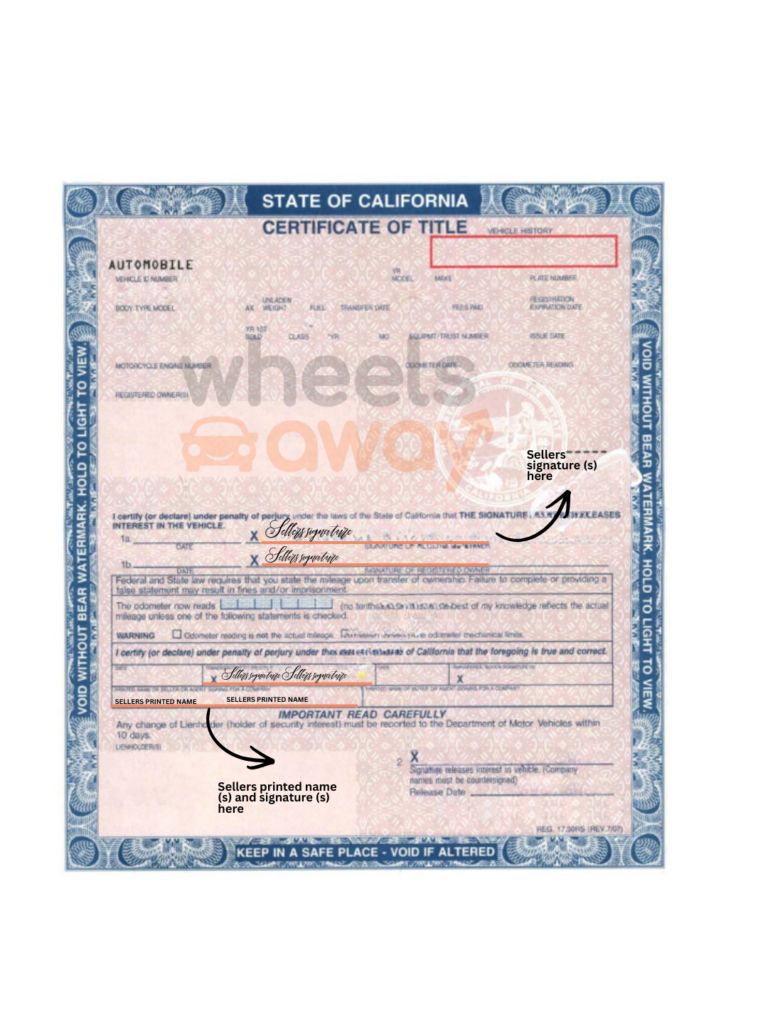
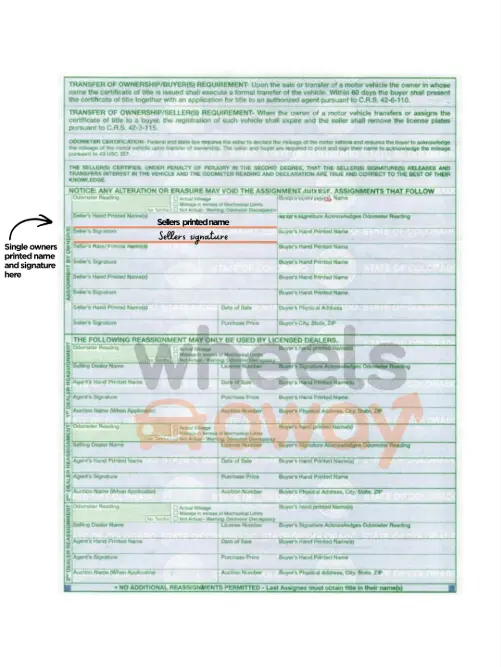
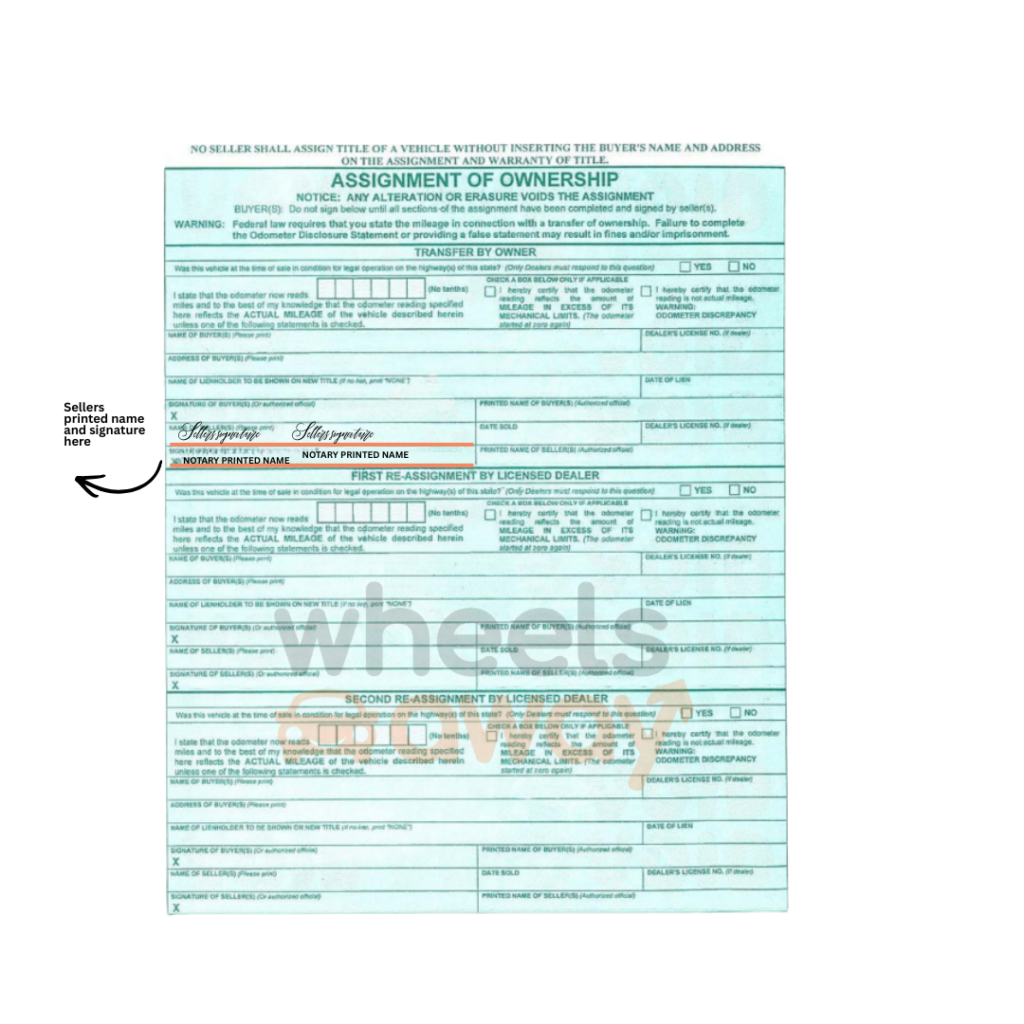
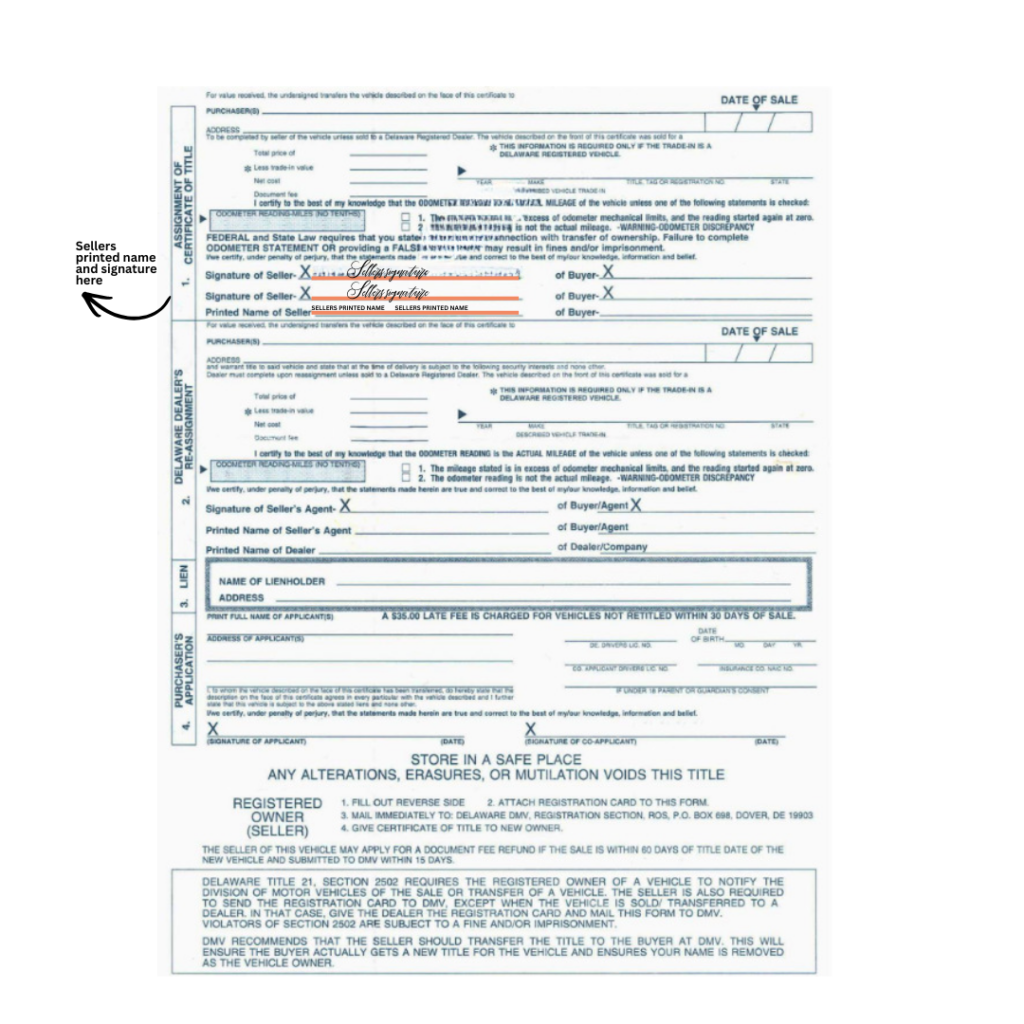
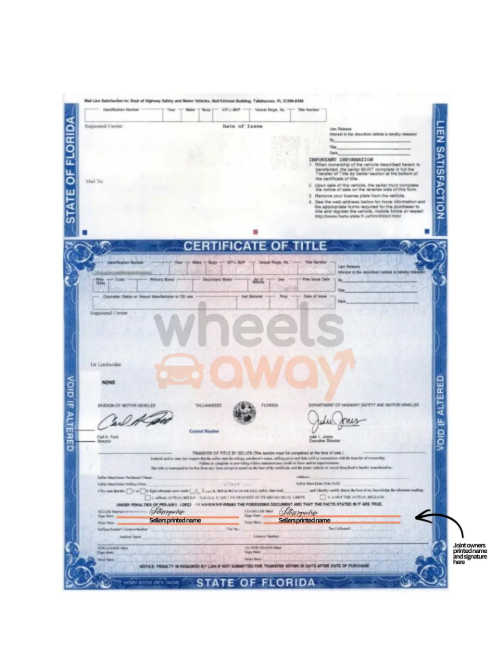
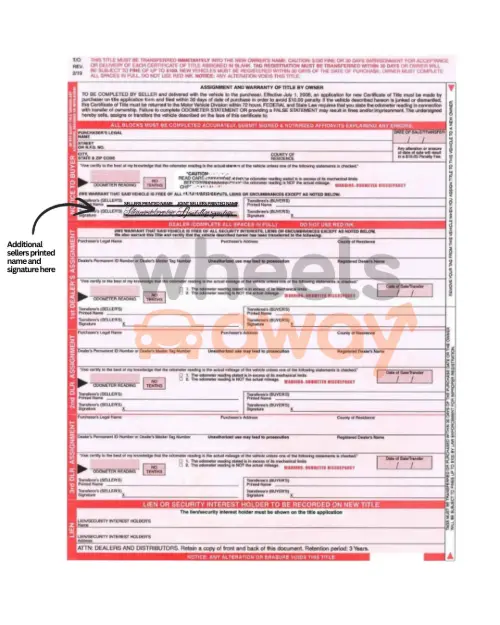
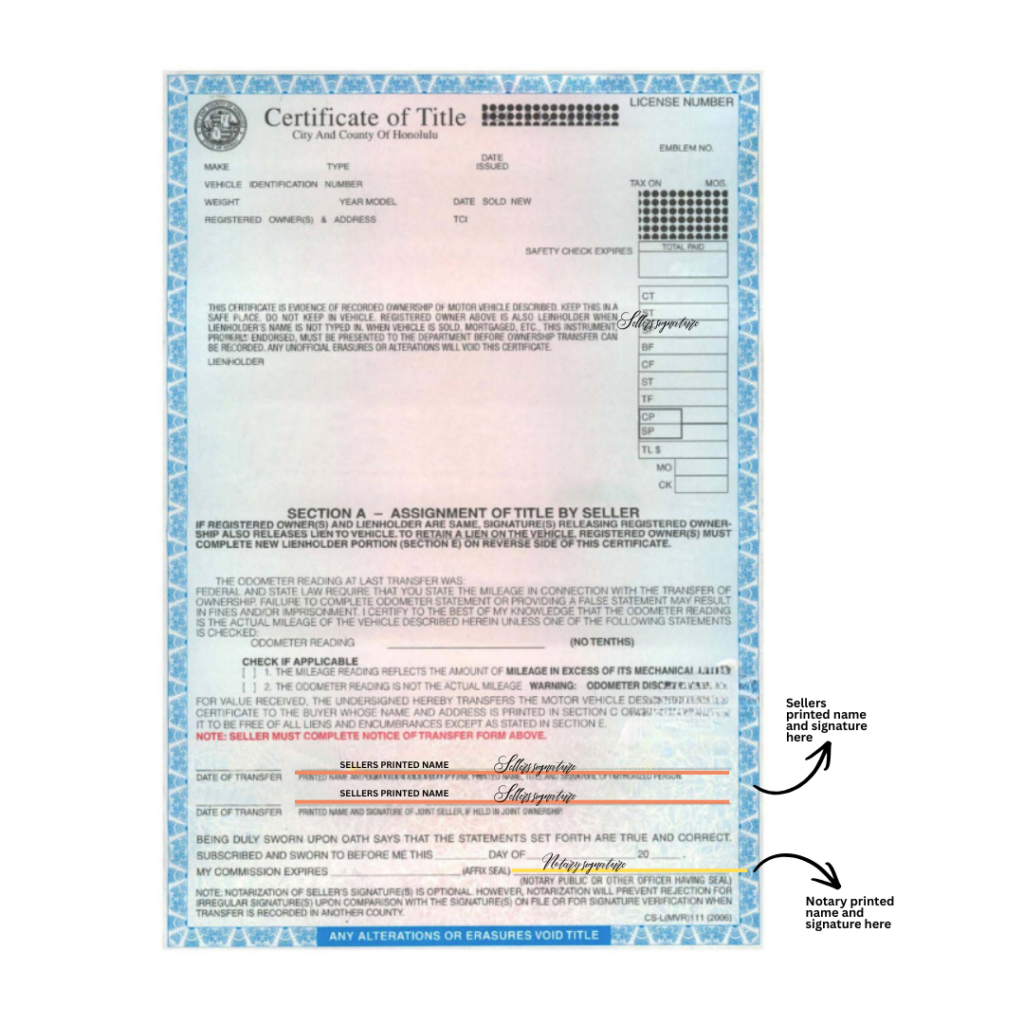
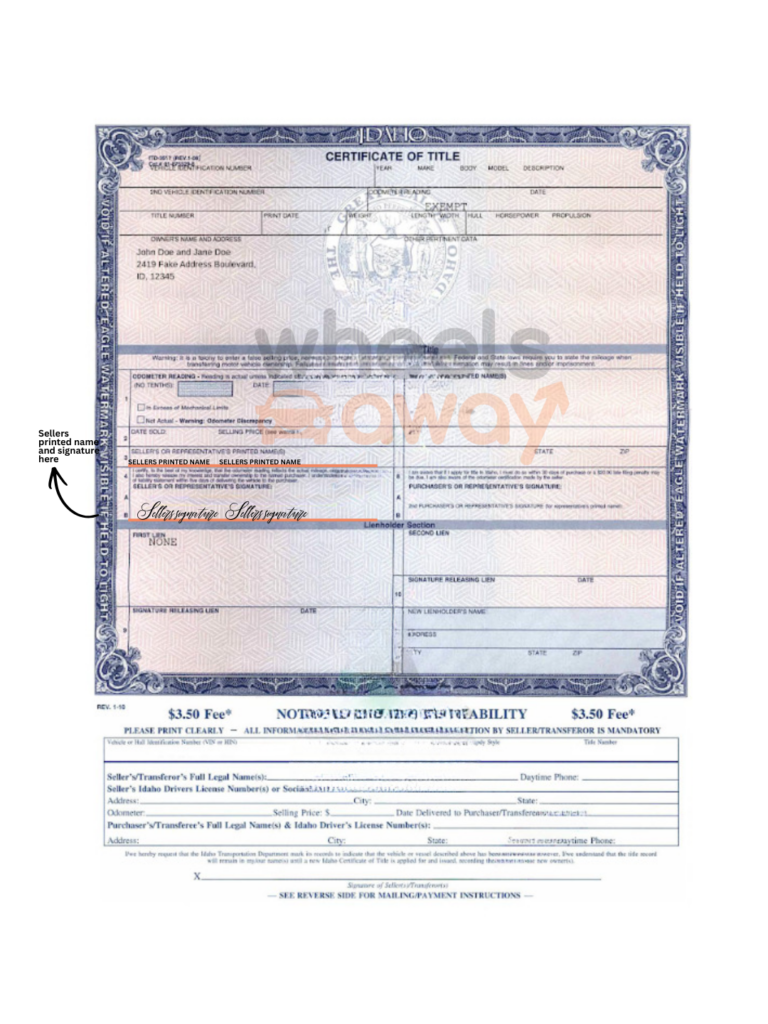
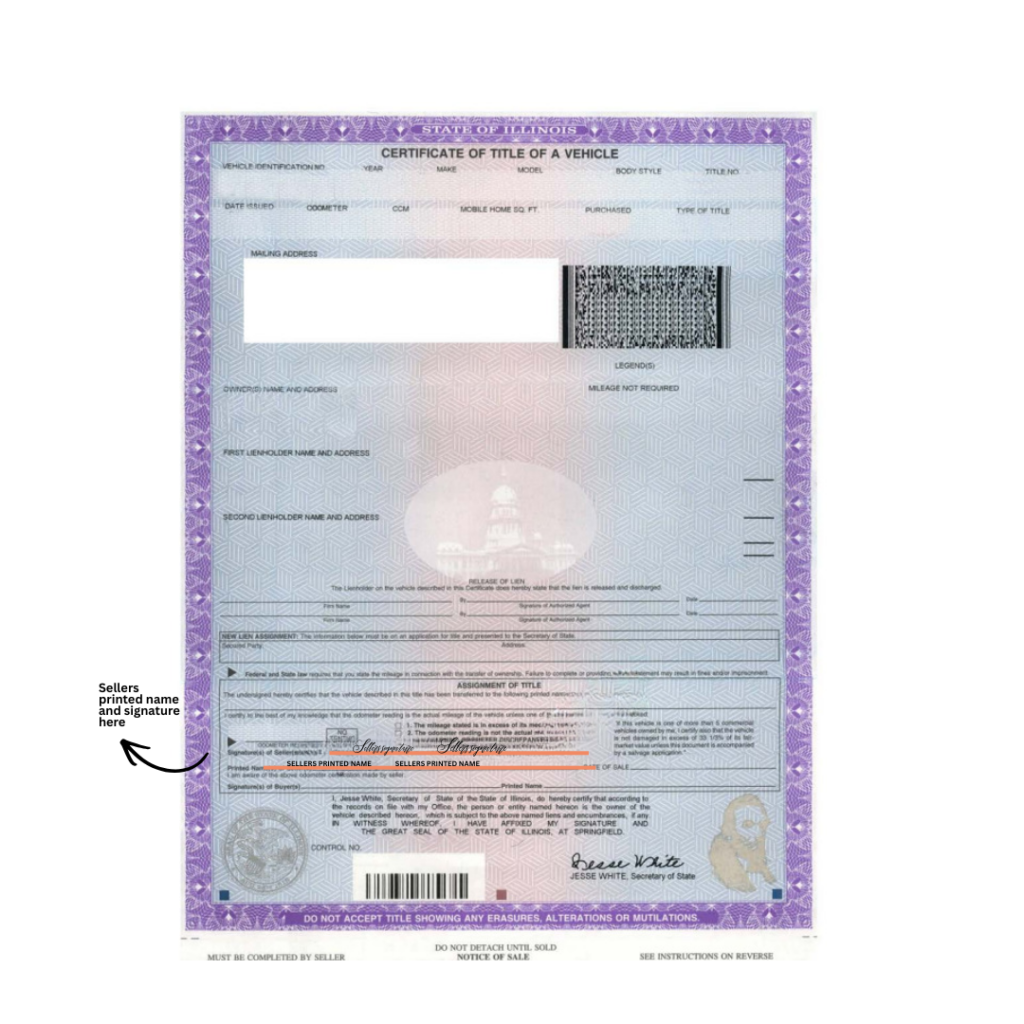
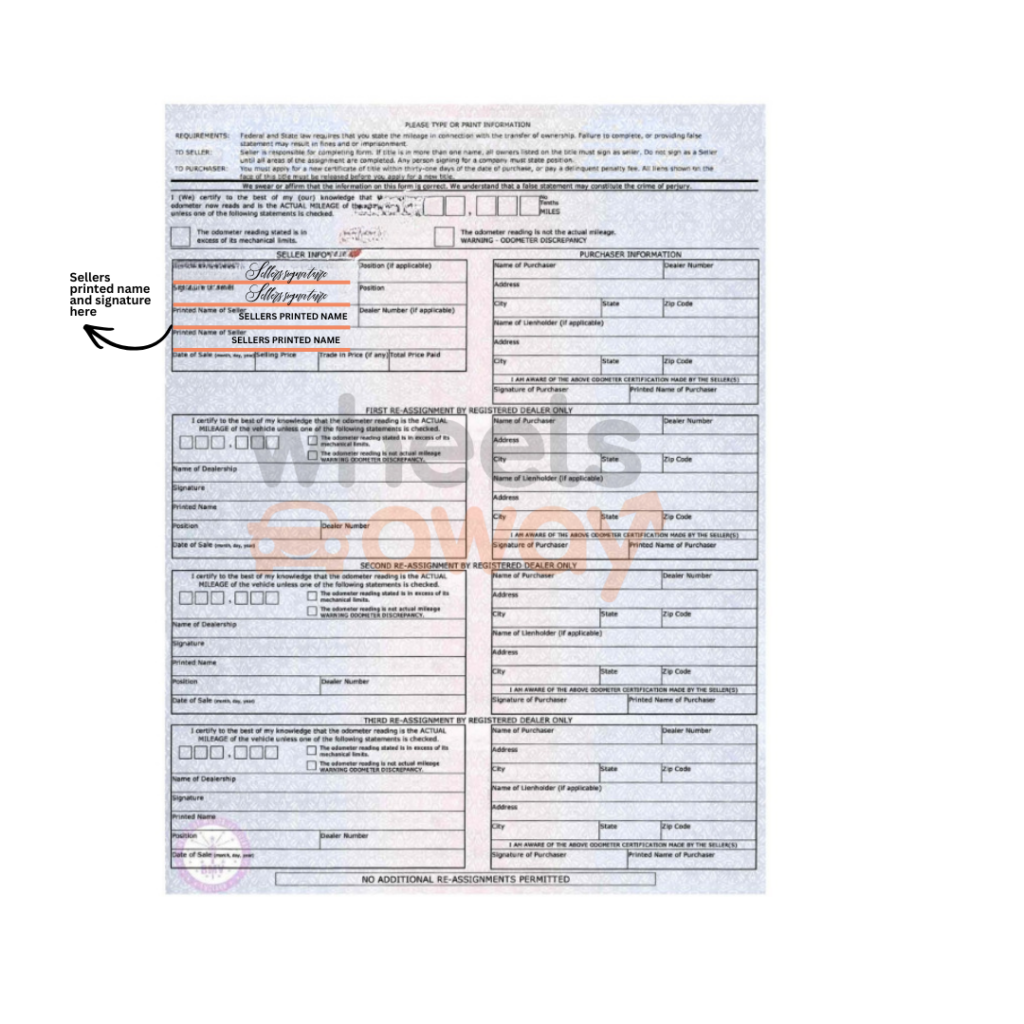
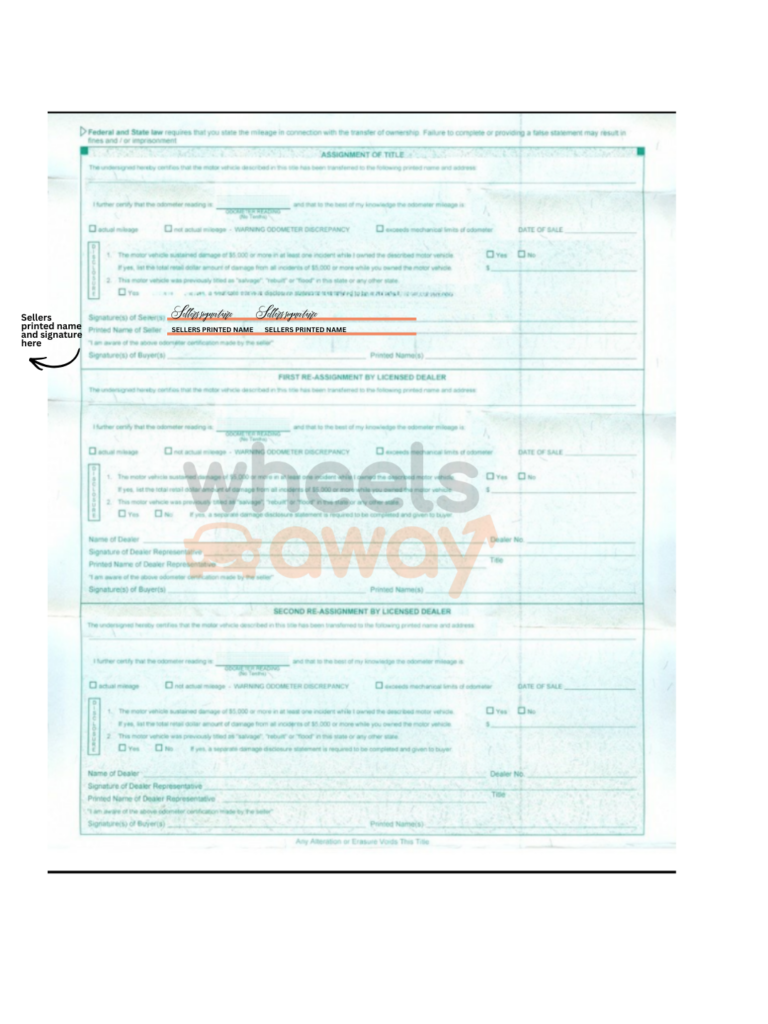
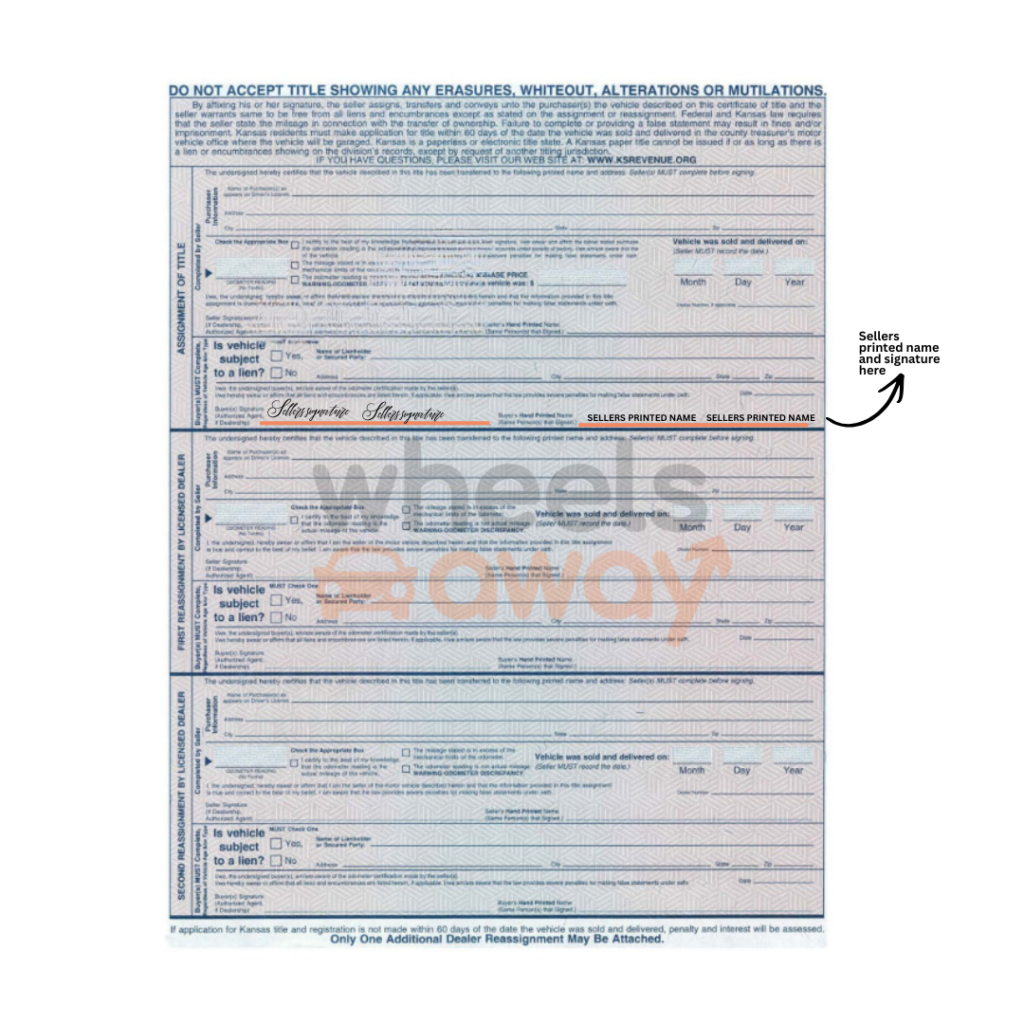
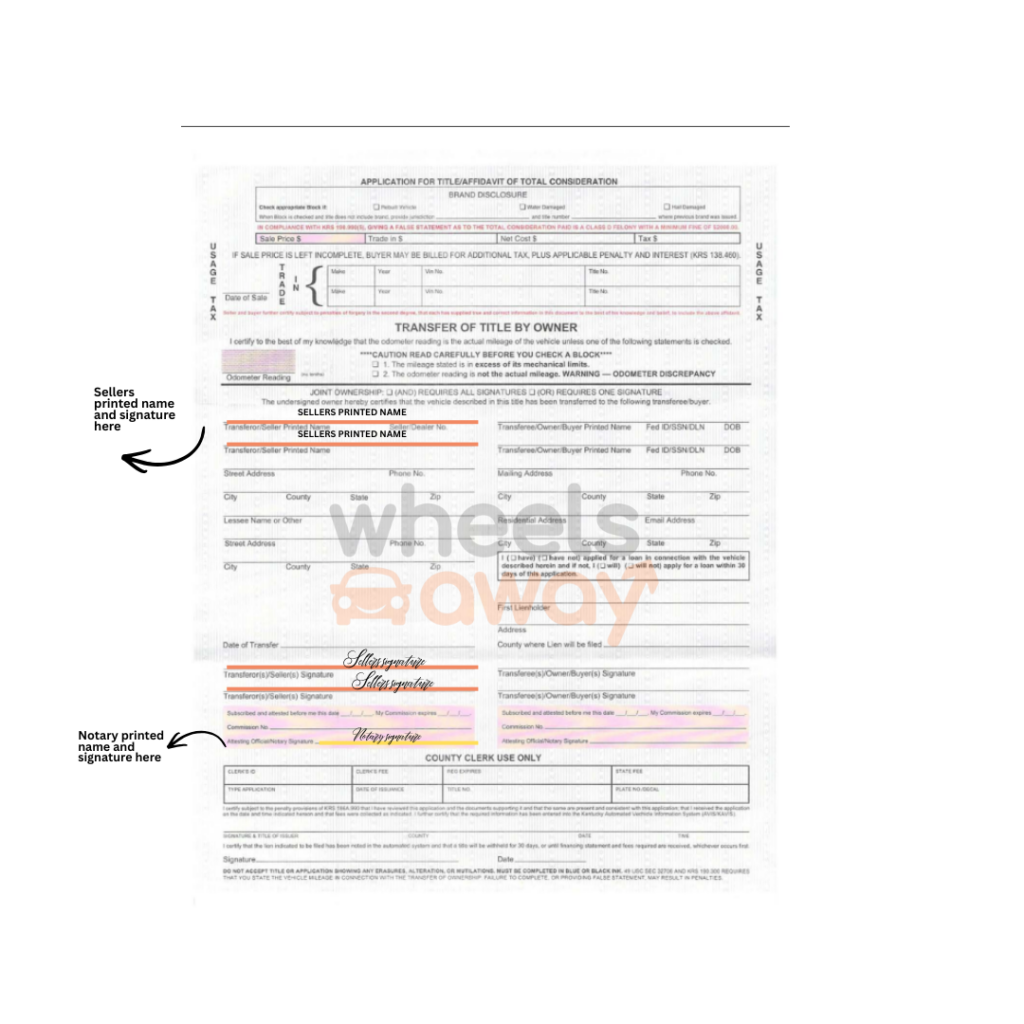
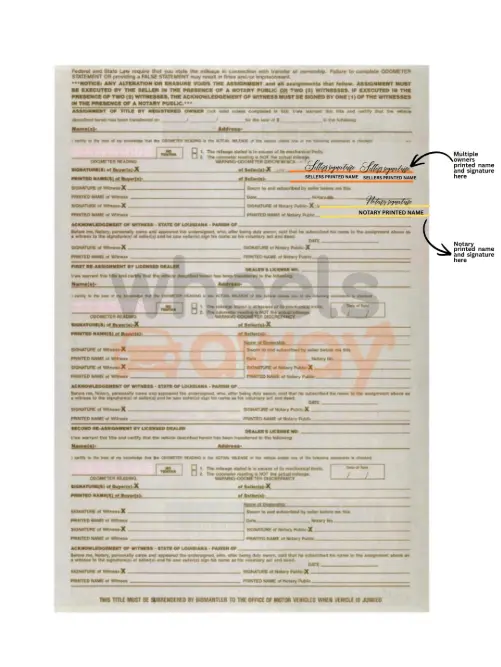
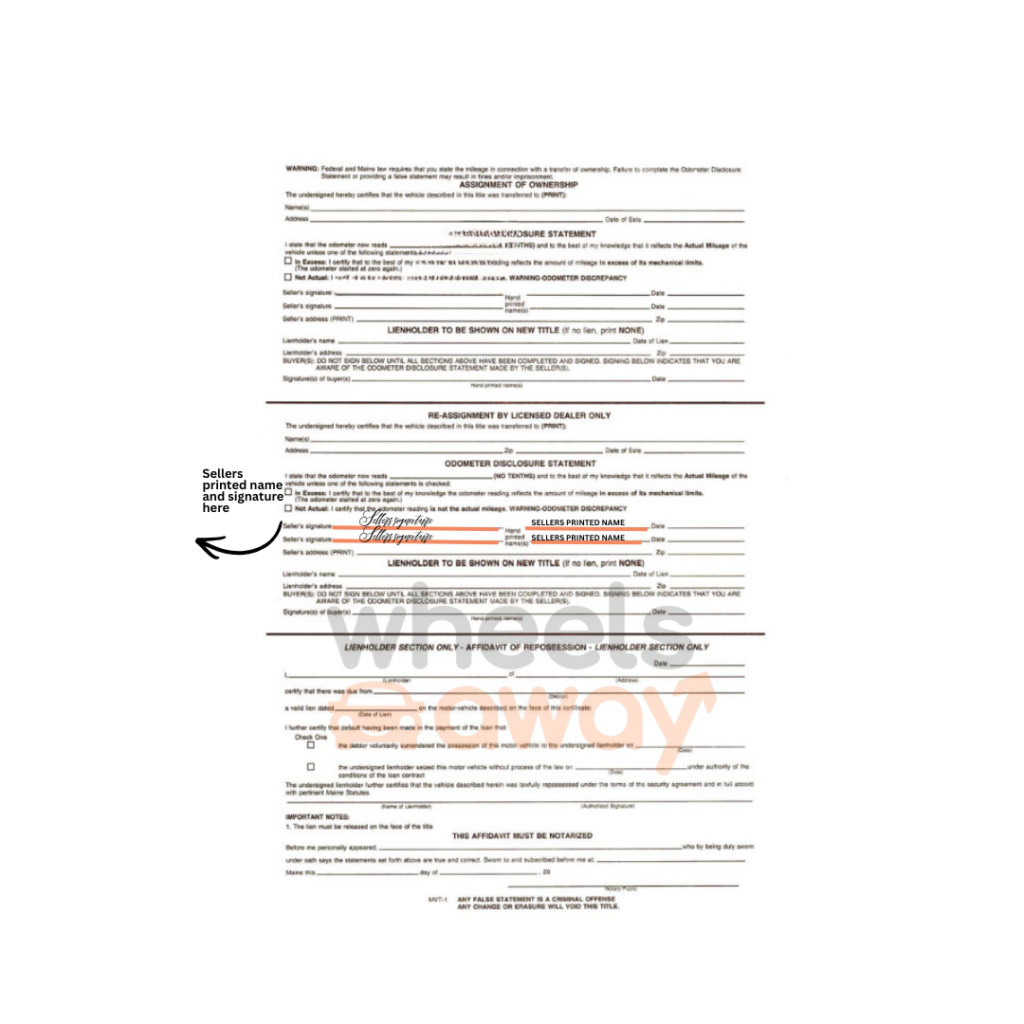

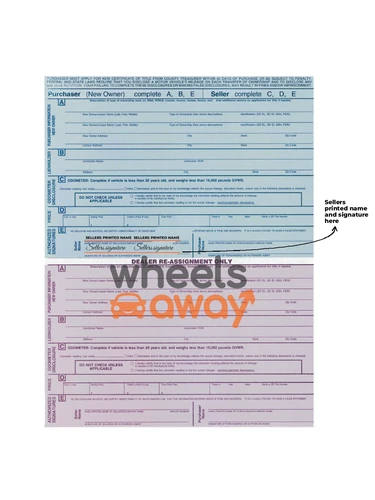
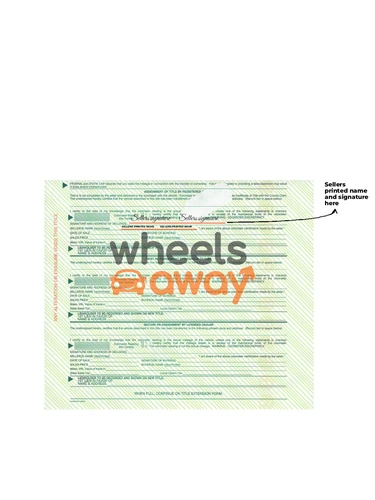
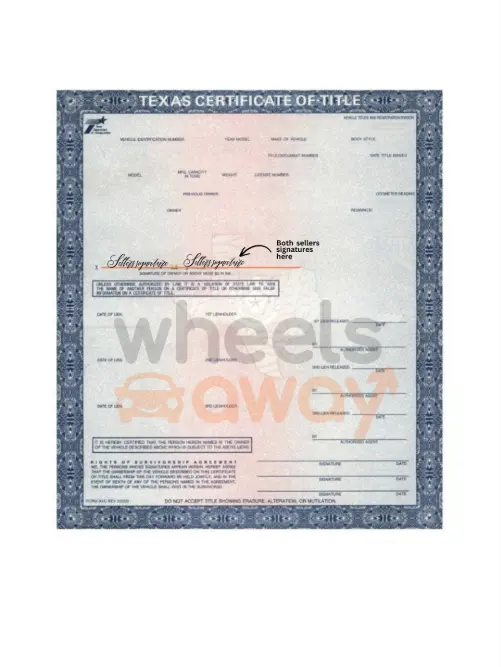
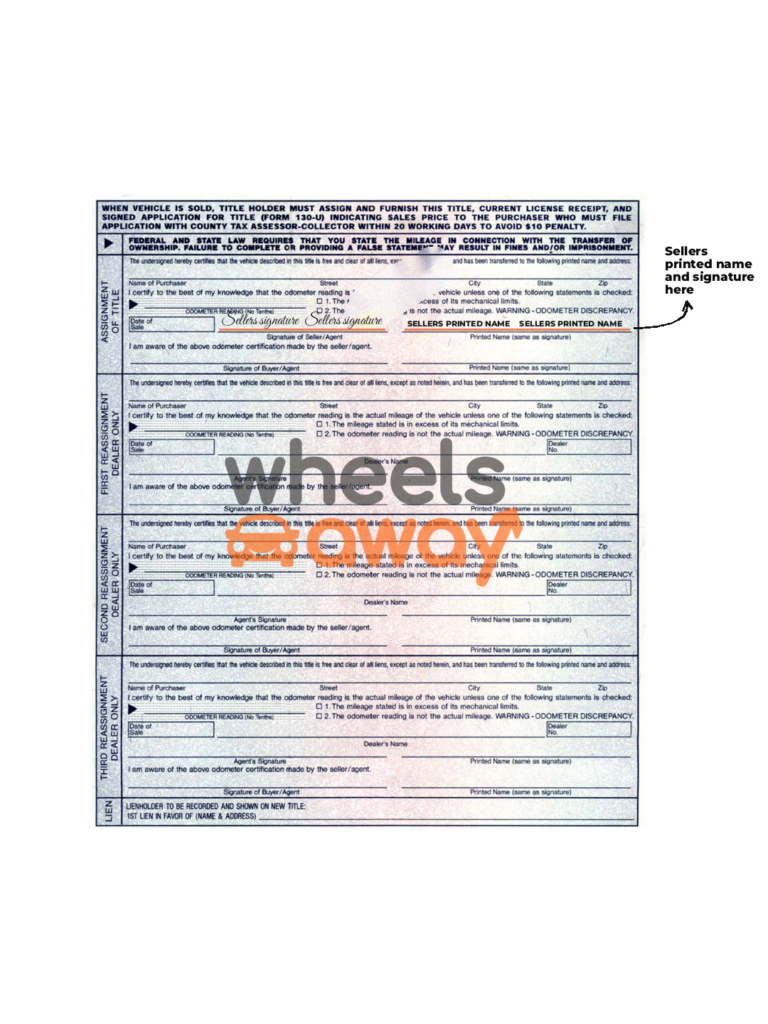
Release of Liability Deadlines by State
A release of liability (sometimes called a notice of transfer) tells the state you no longer own the car, so later tickets and tolls aren’t charged to you. Each state has its own form and deadline, listed in the table below.
| State | Form | Deadline |
| Alabama | No form; keep your bill of sale and surrender or transfer the plate | None |
| Alaska | Notice of Vehicle Sale for Transfer (bottom of the title) | As soon as possible |
| Arizona | Sold Notice (46-8502) | 10 days |
| Arkansas | Notice of Transfer of Ownership of a Motor Vehicle (optional) | None |
California | Notice of Transfer and Release of Liability (REG 138) | 5 days |
| Colorado | Release of liability | 5 days |
| Connecticut | No form; cancel the registration | None |
Delaware | Seller’s report of sale (bottom of the title, or back of the registration card) | None |
| Florida | Notice of Sale (HSMV 82050) | 30 days |
| Georgia | No form; cancel the registration (Form MV-18J) before canceling insurance | None |
| Hawaii | Notice of Transfer (top of the title, or county form) | 10 days |
| Idaho | Notice of Release of Liability (ITD 3858), $3.50 | 5 days |
Illinois | Seller’s Report of Sale (VSD 703) | Not confirmed |
| Indiana | No form; the buyer must title the car within 45 days | None |
Iowa | Notice of Sale of Vehicle and Delivery of Title (Form 411107) (optional) | None |
Kansas | Seller’s Notification of Sale (TR-216); not needed if you transfer or surrender the plate | None |
| Kentucky | None | None |
| Louisiana | Notice of Vehicle Transfer | None |
| Maine | None | None |
| Maryland | No form; keep your plate return receipt and copies of the title and bill of sale | None |
| Massachusetts | No form; cancel the registration | None |
| Michigan | No form; keep a copy of the title and a record of the sale for 18 months | None |
| Minnesota | Report vehicle sold | Not stated |
Mississippi | No form; surrendering the plate removes your name | None |
Missouri | Notice of Sale (Form 5049) or Bill of Sale (Form 1957) | 30 days |
| Montana | No form; the state says sellers don’t need to notify the county | None |
Nebraska | None; keep your bill of sale as proof | None |
Nevada | Registration Cancelation and Vehicle Resale Notification | Not stated |
New Hampshire | None | None |
New Jersey | No form; the plate surrender receipt is your proof | None |
New Mexico | Notice of Vehicle Sold (MVD-10048) | Not stated |
New York | No form; surrender the plates before canceling insurance | None |
North Carolina | No form; file MVR-46F if the car still shows on your registration | None |
North Dakota | None; keep your Seller’s Certificate and Bill of Sale | None |
Ohio | None | None |
| Oklahoma | Notice of Transfer of Ownership of a Vehicle (Form 773), $10 | None |
Oregon | Notice of sale | 10 days |
Pennsylvania | No form; get a signed receipt from the buyer | None |
Rhode Island | No form; cancel the registration | None |
South Carolina | Notice of Vehicle Sold (Form 416) | None |
South Dakota | Report of sale | Not stated |
| Tennessee | None; you may need to respond to a DIFD-9 notice confirming it has been sold | None |
Texas | Vehicle Transfer Notification (VTR-346) | 30 days |
Utah | Report of sale | Not stated |
| Vermont | No form; cancel the registration (Form VD-170) | None |
Virginia | Report a Vehicle Sold or Traded (required by law) | Not stated |
| Washington | Report of Sale, $18 | 5 days |
West Virginia | Sold Vehicle or Watercraft Notice (DMV-1-S) | Not confirmed |
Wisconsin | Seller notification | Not stated |
Wyoming | None | None |
License Plates and Registration
In 46 states, the plates stay with the seller rather than the car, according to Wheels Away’s October 2026 review of state motor vehicle agency rules. In 14 of those states, you must transfer the plates to another vehicle or surrender them when you sell. In the rest, you can keep them, though some set conditions, such as returning them if you don’t reuse them within a set time.
We break down the rules in each state below.
| State | Surrender, transfer, or keep | Details | Online portal, address or office |
| Alabama | Keep | Remove on sale; transfer to another vehicle, or surrender voluntarily | Surrender at your local county license plate issuing office |
| Alaska | Stays on car | Standard plates stay with the vehicle; remove personalized or specialty plates | No action for standard plates |
Arizona | Keep | Transfer to another vehicle or recycle; no need to return to MVD | Transfer through AZ MVD Now or an MVD office |
| Arkansas | Keep | Remove on sale; can be assigned to another vehicle | Transfer online through DFA or at your local state revenue office |
California | Stays on car | Standard plates stay with the vehicle; personalized and special plates can be reassigned for a fee | No action for standard plates |
| Colorado | Transfer or surrender | Remove before the sale | Surrender at your local county motor vehicle office |
| Connecticut | Keep | Cancel the registration; plates can be discarded | Cancel online, or mail Form E-159 to DMV Registry Record Section, 60 State Street, Wethersfield, CT 06161-5057 |
| Delaware | Keep | Only if retained before the sale; otherwise the plate goes with the car | Retain in person at any DMV location; online only if the vehicle was sold out of state |
| Florida | Surrender | Unless transferring, or file Notice of Sale HSMV 82050 | Surrender at your local county tax collector or license plate agency, or mail with a signed statement and copy of photo ID |
| Georgia | Keep | Cancel the registration before canceling insurance | Cancel online through DRIVES e-Services, or Form MV-18J at your local county tag office |
| Hawaii | Keep | On a private sale, remove the plates; keep them or cancel them. Dealers usually remove the plates and send them to the DMV | Cancel at your local county Satellite City Hall or DMV office; submit a Notice of Transfer within 10 days |
Idaho | Keep | Plates stay with the seller; transfer for a fee | Optional cancellation (ITD 3438): email SpecialPlates@ITD.Idaho.gov or mail ITD Vehicle Services, PO Box 7129, Boise, ID 83707-1129 |
| Illinois | Keep | Transfer to another vehicle | Transfer at a Secretary of State facility |
| Indiana | Keep | Remove on sale; no need to surrender; make unusable if disposing | No return needed |
| Iowa | Surrender | Remove plates and turn them in | Surrender at your local county treasurer’s office |
| Kansas | Transfer or surrender | Always remove on sale | Surrender at your local county treasurer’s motor vehicle office |
Kentucky | Keep | Transfer ($11) or renew; return if the registration has expired | Return at your local county clerk’s office |
Louisiana | Keep | Remove on sale; transfer or cancel | Cancel online, or transfer at any OMV field office |
Maine | Keep | Reuse on a replacement vehicle ($8); return if not renewed or transferred within 6 months | Return at your local BMV branch |
| Maryland | Surrender | Unless transferring | Branch 24-hour drop box with Form VR-027, or mail to MVA, 6601 Ritchie Highway N.E., Glen Burnie, MD 21062 |
Massachusetts | Keep | Cancel the registration; recycle or destroy plates | Cancel online through myRMV, or by mailed affidavit |
| Michigan | Keep | Remove before the buyer takes the car; transfer or destroy | Transfer at a Secretary of State branch office |
| Minnesota | Stays on car | Standard plates stay with the vehicle; personalized and special plates can be transferred | Report the sale online |
Mississippi | Surrender | Plates can’t move to a new vehicle | Surrender at your local county tax collector’s office |
Missouri | Keep | Remove before the buyer takes the car; what to do next isn’t stated | File Notice of Sale (Form 5049) within 30 days at a license office |
Montana | Keep | Transfer to another vehicle | Transfer at your local county treasurer’s office |
Nebraska | Keep | Registration expires on sale; plates can move to another vehicle you own | Transfer at your local county treasurer’s office |
Nevada | Transfer or surrender | Cancel the registration after the sale | Cancel online through MyDMV; mail plates to DMV Central Services Division, 555 Wright Way, Carson City, NV 89711-0700 |
New Hampshire | Keep | Plates belong to the first registered owner; transfer to a vehicle in the same name | Transfer at your local town or city clerk |
New Jersey | Surrender | Unless transferring | Drop box at any motor vehicle agency, or mail to an MVC agency with a stamped addressed envelope for the receipt |
New Mexico | Transfer or surrender | Within 30 days, transfer to a same-class vehicle or take to MVD to be destroyed | Any MVD office |
New York | Surrender | Unless transferring, before canceling insurance | Mail Form PD-7 and plates to NYS DMV, 6 Empire State Plaza, Room B240, Albany, NY 12228, or a DMV office |
North Carolina | Surrender | Immediately unless transferring, before canceling insurance | Any license plate agency, or mail to NCDMV Vehicle Registration Section, 3148 Mail Service Center, Raleigh, NC 27697-3148 |
North Dakota | Keep | Remove on sale; credit if transferred to a replacement | Transfer at a motor vehicle site |
| Ohio | Keep | Remove immediately; transfer to a replacement within 30 days | Transfer at a deputy registrar license agency |
Oklahoma | Keep | The plate is assigned to the person, not the vehicle | Transfer at a tag agency |
Oregon | Stays on car | Unless the seller chooses to remove them before selling | Report the sale online through DMV2U within 10 days |
Pennsylvania | Keep | Keep to transfer, or return if not reusing | Mail to PennDOT Return Tag Unit, Bureau of Motor Vehicles, P.O. Box 68597, Harrisburg, PA 17106-8597 |
Rhode Island | Keep | Cancel the registration when you stop using the vehicle; mail the plates if not canceling online | Cancel online, or certified mail plates to RI DMV, ATTN: Plate Office, 600 New London Avenue, Cranston, RI 02920 |
South Carolina | Surrender | Unless transferring | Mail to SCDMV, Plate Turn-In, PO Box 1498, Blythewood, SC 29016-0024, or any SCDMV branch |
South Dakota | Keep | Plates stay with the owner for the next vehicle | Report the sale in the online portal or at your county treasurer |
| Tennessee | Keep | Plates follow the owner; transfer for $1 | Transfer at your local county clerk’s office |
| Texas | Keep | Transfer free of charge, or deface and dispose | Transfer at your local county tax assessor-collector’s office |
| Utah | Keep | Remove unless sold with the car; no return needed | Report the sale online through the Motor Vehicle Portal |
| Vermont | Keep | Don’t leave plates on the car; return is optional | Optional return by mail to DMV, 120 State Street, Montpelier, VT 05603-0001 |
Virginia | Surrender | Immediately unless transferring | Surrender online, at a customer service center, or mail with Form FMS 210 to Virginia DMV, 2300 West Broad St, Richmond, VA 23269 |
Washington | Transfer or surrender | Must remove on sale | Report the sale online; surrender at your local vehicle licensing office |
West Virginia | Keep | Transfer to another vehicle within 60 days ($10) | Transfer at a WV DMV regional office |
Wisconsin | Keep | Remove; reuse or cut up; don’t return to DMV | No return needed |
| Wyoming | Keep | Plates belong to the person; remove on sale | Transfer at your local county treasurer’s office |
Selling With an Outstanding Loan
If you still owe money on the car, your lender (the lienholder) usually holds the title or is listed on it. Contact your lender before you sell to ask how it will release the lien, and check with your state’s DMV what paperwork the buyer will need. Some lenders let the sale money go straight toward the loan, but that’s the lender’s decision.
Canceling Insurance in the Right Order
You may still be the car’s registered owner until the title transfer and any release of liability are filed. Ask your insurer and your state’s DMV when it’s safe to cancel your policy, so you’re not left uninsured on a car that’s still in your name.
How to Check a Shop or Junk Car Buyer Is Licensed
You can check a transmission shop’s qualifications through technician certification and trade membership, and in some states through a shop registration. You can check a junk car buyer through your state’s dismantler licensing agency. Neither has a single national register.
Checking a Transmission Shop
Look for ASE-certified technicians, ideally with the A2 certification, and ATRA membership. Some states also register repair shops: California’s Bureau of Automotive Repair registers automotive repair dealers, and the New York DMV registers repair shops in that state.
Checking a Junk Car Buyer or Dismantler
Auto dismantlers and salvage yards are licensed by the state, and sometimes by the city or county. Check the buyer’s license number with your state licensing agency before you hand over the title, and get a written quote and a receipt with their business name.
Under federal law, a junk or salvage yard that handles five or more junk or salvage vehicles a year must report them at least monthly to the National Motor Vehicle Title Information System (NMVTIS), administered by the Bureau of Justice Assistance.
You can check a yard’s reporting status through the American Association of Motor Vehicle Administrators (AAMVA). An approved NMVTIS data provider and the free National Insurance Crime Bureau (NICB) VINCheck show what has been reported against the car’s VIN.
Keeping the Next Transmission Alive
A few habits can reduce wear on a transmission and help you catch problems early:
- Follow the fluid schedule in your owner’s manual, using the severe-service interval if you tow or drive in heavy traffic.
- Use the specified transmission fluid, since CVTs and dual-clutch units may need specialist fluids.
- Keep your invoices and service records, since replacement unit warranties may require proof of maintenance.
“Most transmissions give you warning signs before they fail, like slipping, delayed shifts, or a new noise. Get them checked early, before a small fix becomes a full replacement,” says Luke Oswald, End of Life Vehicle Specialist at Wheels Away.

More Information
These FTC resources cover your rights when you get a transmission repaired:
- FTC: Auto Repair Basics explains written estimates, repair orders and your consumer rights.
- ReportFraud.ftc.gov is where to report deceptive repair practices.
How We Collected the Data
Wheels Away collected KBB Fair Repair Range dealer estimates for transmission replacement on October 13, 2026, using one city ZIP code per state for four 2018 models: a Toyota Camry LE (automatic), Nissan Rogue SV (CVT), Honda Civic Type R (manual) and Audi A3 Premium (dual-clutch). Totals combine the midpoints of KBB’s parts and labor ranges. Unit prices from manufacturer and dealer parts stores and eBay Motors listings were collected on October 14, 2026. RepairPal’s independent-shop labor estimates for the 2018 Camry LE were collected in October 2026 for the same ZIP codes. eBay Motors figures use the middle half of asking prices. Camry listings exclude hybrid, V6 and AWD units and listings under $1,000 or over $12,000. Rogue listings exclude the Rogue Sport, hybrid, remanufactured and 2021 – and later – units. Unrepaired values are Wheels Away instant offers collected in October 2026 in ZIP code 48104, and brake estimates are KBB figures for ZIP code 43085, checked October 21, 2026. All figures are indicative.
FAQs
A transmission replacement can take up to 15 hours on a standard car, depending on the transmission type, drivetrain layout, extent of the damage and the availability of replacement parts, according to Luke Oswald, End of Life Vehicle Specialist at Wheels Away.
You shouldn’t drive with a failing transmission. Driving on it can increase the damage and leave you stranded if the car suddenly loses drive. As Luke Oswald, End of Life Vehicle Specialist at Wheels Away, explains: “If you notice slipping gears, delayed shifting or unusual noises, arrange a diagnosis as soon as possible. If the car loses power or struggles to change gears, stop driving when safe and arrange recovery.”
You shouldn’t drive with a failing transmission. Driving on it can increase the damage and leave you stranded if the car suddenly loses drive. As Luke Oswald, End of Life Vehicle Specialist at Wheels Away, explains: “If you notice slipping gears, delayed shifting or unusual noises, arrange a diagnosis as soon as possible. If the car loses power or struggles to change gears, stop driving when safe and arrange recovery.”
You can if you’re an experienced home mechanic with a lift, a transmission jack, and the right scan tools. CVTs and dual-clutch units may need programming after installation, and some remanufactured unit warranties require professional installation.
A transmission typically lasts around 150,000 to 200,000 miles, although its lifespan depends on the vehicle, maintenance history, and driving conditions. Frequent stop-start driving, heavy towing, and neglected transmission fluid can contribute to premature wear. As Luke Oswald, End of Life Vehicle Specialist at Wheels Away, explains, regular maintenance and addressing early warning signs can help prevent minor transmission problems from developing into costly repairs.
No. A new transmission restores the car’s normal market value for its year, make and model, but rarely raises it above that. Use the repair-to-value calculation above to check whether the repair pays for itself.
References
- Kelley Blue Book, Fair Repair Range transmission estimates for the 2018 Toyota Camry LE, 2018 Nissan Rogue SV, 2018 Honda Civic Type R and 2018 Audi A3 Premium, collected October 2026
- RepairPal, transmission replacement labor estimates for a 2018 Toyota Camry LE in all 50 states, collected October 2026
- eBay Motors, used 2018 Nissan Rogue CVT listings, checked October 2026
- Nissan Parts, 2018 Rogue SV transmission, checked October 2026