Instant Cash Offer For Your Vehicle
Fair Quote, Free Pickup, Fast Cash, Gone Today.
4.5 Rating Trustpilot
Fair Quote, Free Pickup, Fast Cash, Gone Today.
4.5 Rating Trustpilot
|
|
Key takeaways
- Salvage and rebuilt title vehicles can carry significant financial and personal risk.
- Limited insurance choices, lower resale value, and risks like title washing and hidden damage are major issues for buyers.
- Extensive investigations like vehicle history reports and independent inspections can help protect you against fraudulent sellers.
Salvage vs rebuilt title: what’s the difference?
A rebuilt title is not the same as a salvage title.
Salvage: A total-loss vehicle (insurance write-off) that’s not road legal until repaired and inspected, and always keeps this history.
Rebuilt: A prior salvage vehicle that someone repaired, inspected, and made road legal, though it will permanently retain its branded title.
Salvage title
A salvage title is a title brand given to a vehicle if an insurance claim has been made against it, and the cost to repair it exceeds its Actual Cash Value (ACV). Insurers then consider the vehicle ‘totaled’. This term is financial rather than mechanical, which is why some salvage title vehicles still run.
Even if it still runs, you cannot register or drive it on public roads. It must be inspected and repaired first. It is then given a rebuilt title.
Rebuilt title
A rebuilt title is a title brand for a vehicle once considered “totaled.” It has been inspected and repaired and is now considered safe to drive on public roads.
A rebuilt title is permanent. A rebuilt title vehicle can never become a clean title. This brand serves as a permanent legal record to protect future buyers.
Rebuilt inspections, sometimes called salvage inspections, are often done by your local DMV or an equivalent authority. A third-party provider may also perform them. They often combine VIN checks with stricter safety and emissions checks to ensure the vehicle is safe.
Difference between salvage and rebuilt titles
| Similarities | Differences |
| Both have a permanent total loss history. | Salvage vehicles often have significant damage and are not road legal. Rebuilt vehicles have been repaired. |
| Both have a lower resale value than clean title vehicles. | Rebuilt vehicles have a higher resale value than salvage vehicles. |
| Both can be hard to insure. | Rebuilt vehicles have more insurance coverage and lender options than salvage vehicles. |
| Both have a higher risk of hidden damage. | Salvage vehicles are often sold at auction. Rebuilt vehicles are often supplied by dealerships and private sellers. |
Rebuilt vs salvage title: ultimate buyers guide
Purchase price
Title status can permanently affect a vehicle’s value. You could buy a rebuilt or salvage vehicle for anywhere between 20–40% less than a clean-title equivalent.
If it’s time to junk your old car and buy something new, it’s important to understand the risks of branded titles. A cheaper upfront costs represents risks like:
- Fewer insurance options: Salvage vehicles can’t be insured. Only limited coverage options are available for rebuilt vehicles.
- Hard to finance: Many lenders won’t finance branded title vehicles. You may need to pay cash. If you get a personal loan, expect higher interest rates. You may also face longer repayment terms.
- Purchase discount shows at resale: The vehicle’s value drops over time and will drop faster than one without a total loss history.
Insurance options
Key takeaway: You can’t insure a salvage title car. Rebuilt title cars are often liability coverage only.
Salvage title vehicles declared a total loss cannot be insured until they are repaired, inspected, and issued a rebuilt title.
Rebuilt title vehicles can usually be insured, but coverage is often limited to liability-only policies.
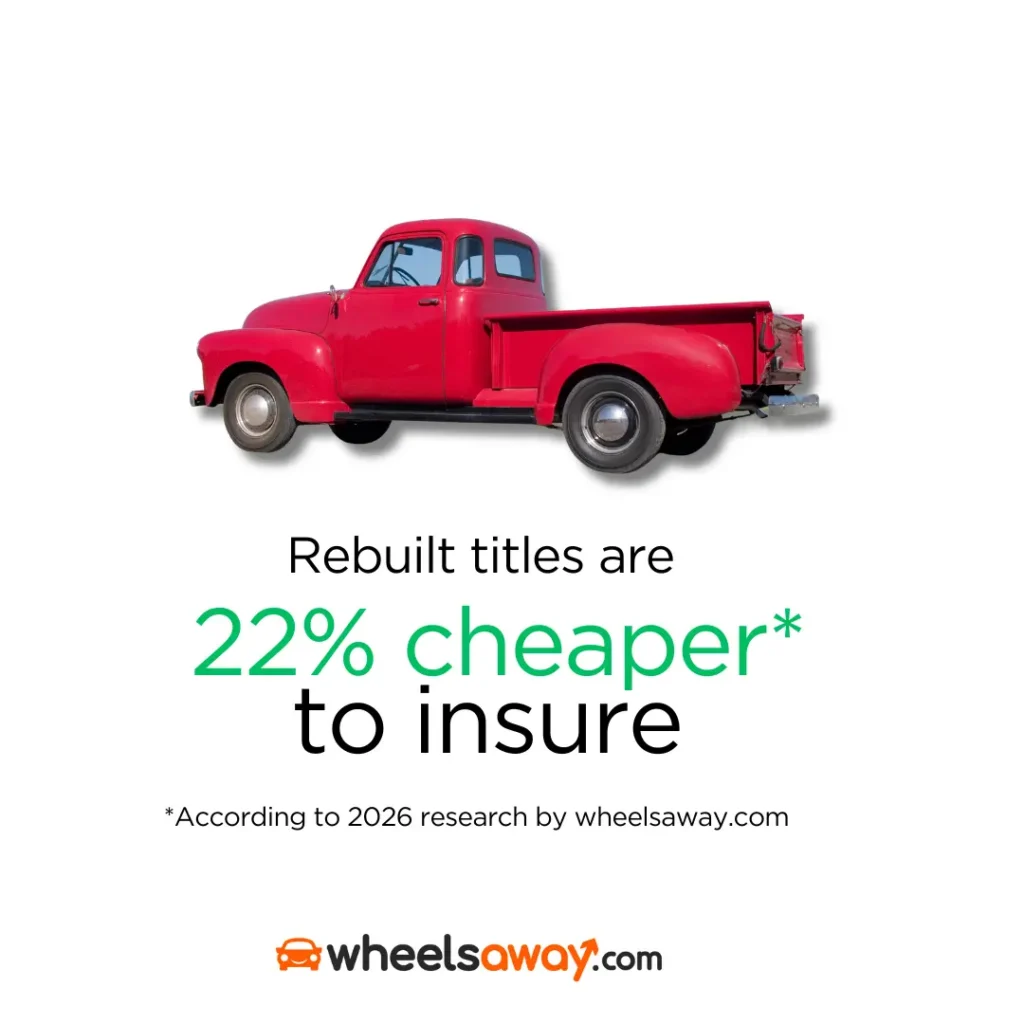
Wheelsaway’s 2026 research shows rebuilt vehicles can cost up to 22% less to insure. However, lower premiums can come at the expense of reduced protection. Consumers may face higher repair costs if involved in an accident without collision coverage.
Understanding financial risk
Key takeaway: Rebuilt and salvage title vehicles both carry personal and financial risk that should be carefully considered before purchase.
Salvage title
One of the biggest risks of salvage and rebuilt title vehicles is financial.
Repair costs can add up fast. Especially true major parts are damaged. Buyers will also have to account for additional inspection, registration, and insurance fees.
Many salvage vehicle selling platforms like Salvage Bid do not own or inspect the vehicle, and are often unable to verify its condition. This can make it harder to anticipate future repair costs.
Rebuilt title
If you can’t verify repair quality with a full service history, there’s a risk that poor quality repairs could lead to expensive costs.
Vehicle history reports show past damage. Only repair records and a pre-purchase inspection can confirm repair quality. They can also uncover hidden flood damage or fault code problems.
Resale values
Key takeaway: Rebuilt titles are worth approximately 29% less than clean title equivalents.
Salvage title vehicles are rarely bought and resold with their existing title brand- they are usually bought as salvage, repaired and retitled, and then resold as rebuilt title vehicles.
So, to help you understand the resale value of rebuilt vehicles, we analyzed how the value of rebuilt title vehicles compares against clean titles for the same make and model.
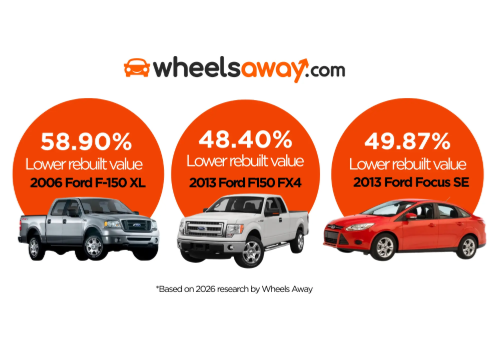
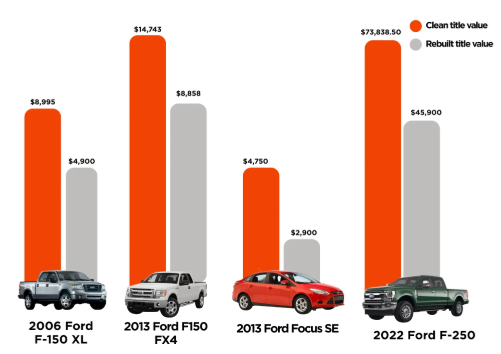

“It’s possible that trucks and utility vehicles lose more value. Buyers may care more about long-term reliability and durability. Some premium models may hold their value better where buyer demand stays strong and repairs are clearly documented.” explains automotive specialist Luke Oswald.
Regardless of age or model, if you attempt to resell a vehicle with a branded title, you’ll lose money.“The title history remains a major factor that’s difficult to overcome, even with quality repairs. In many cases, rebuilt vehicles are best kept long-term – either as reliable daily drivers or hobby cars – as resale values remain low, even after mods or upgrades.”
Title washing
Definition: Hiding or removing a vehicle’s negative title history – such as salvage or flood damage – by re-registering it in another state or altering records to make it appear clean.
All branded vehicles are at risk of title washing. Fraudulent sellers may hide a vehicle’s damage history to try and get more cash. This can put you at risk of buying a vehicle with serious faults.
If the car has been moved from one state to another, there may be gaps in its service history, or no history available at all. This makes it extremely difficult to verify repairs and events in its history.
How to safely buy a branded title vehicle
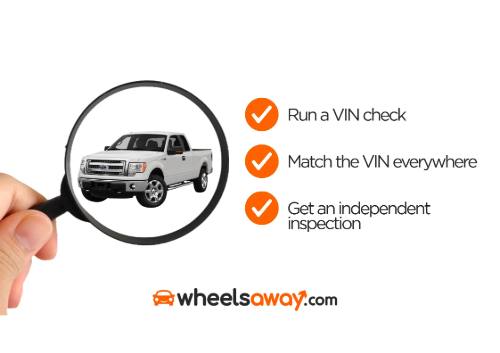
Quick answer: Check the vehicle’s full history. Review write-off category, damage records, and mileage. Get an independent mechanical inspection before you buy a car. Only proceed if repairs are properly documented and the price reflects the reduced value and higher risk.
- Run a VIN check: Run a VIN check with a provider like Carfax to look for issues with reported mileage, evidence of multiple owners, or obvious salvage records.
- Match the VIN everywhere: To make sure you’re checking the real VIN, examine it in several places. Make sure it has not been tampered with.
- Get an independent inspection: Your Pre-Purchase Inspection (PPI) will reveal issues that could indicate hidden mechanical issues or title washing, such as mismatched paint, uneven panel gaps, missing airbags or airbag warning lights, and suspicious fault codes.
Is salvage worse than rebuilt?
Quick answer: Salvage titles are riskier than rebuilt titles. The risk is only worth the reward if you can repair it yourself, get a good deal on parts and labor, and/or you plan to keep the car long-term.
Salvage vehicles can have mild to extensive structural or cosmetic damage. Buying one means more personal and financial risk, and more responsibility to repair and retitle it before it can be allowed back on the road.
Rebuilt vehicles have already been repaired and retitled, and can be used on public roads. Although this means less hassle, admin and immediate financial risk, you are still buying a vehicle with a salvage history. This history cannot be erased, and will affect insurance coverage options, resale value and restrict your upfront payment options.
Methodology
To compare how rebuilt title vehicles hold their value against clean title equivalents, we analyzed real-world vehicle pricing data from dealership and marketplace listings in 2026.
The comparison used 10 different vehicle models across a mix of ages and vehicle types with similar mileage.
Data collection included:
- One rebuilt title value for each model, taken from a dealership or marketplace listing.
- Two clean title values for the same model, matched as closely as possible for mileage, age, trim, and condition.
To keep comparisons as fair as possible:
- Clean title vehicles were selected with similar mileage and specification to the rebuilt example.
- The two clean title values were averaged to create a benchmark market value for each model.
- The rebuilt title value was then compared against this benchmark to calculate the difference in resale value.
Important notes:
- All figures were collected from publicly available listings and dealership websites in 2026.
- Asking prices were used where sale prices were not available.
- Results reflect current market pricing rather than long-term depreciation trends.
- The aim was to show the typical resale discount buyers can expect with rebuilt title vehicles compared to clean title equivalents.
Expert support at every step
Get expert advice at every step of your junking journey. From junking without a title to inside tips on how to boost your payout, Wheels Away can help!
Cash for junk cars
Get an instant quote for your vehicle and learn how simple the process is with Wheels Away.
Scrap car prices
Discover what factors influence the price of your scrap car and how to maximize your payout.
Junk cars without a title
Trying to sell a junk car without a title? Learn how our team can help take the paperwork admin off your hands.
Junk car removal
We offer FREE removal for all vehicles! Learn more about the process and book your free pickup today.
Wheels Away blog
The latest news from our expert team.